
Life in Motion Chiropractic · Livonia, MI
Your jaw pain may be
coming from your neck.
Most TMJ patients have tried night guards, seen their dentist, or been told to manage it. If those approaches haven’t resolved the problem, there’s a reason — and it starts with the cervical spine connection most providers overlook.
What is the temporomandibular joint — and why does it break down?
The temporomandibular joint (TMJ) is the hinge that connects your lower jaw to your skull, just in front of each ear. It’s one of the most complex joints in the body — responsible for every movement your jaw makes: chewing, speaking, yawning, swallowing.
TMJ dysfunction (also called TMD) occurs when this joint or the muscles controlling it stop working properly. The causes are often multiple and overlapping: jaw misalignment, teeth grinding (bruxism), forward head posture, cervical spine dysfunction, muscle imbalance, stress, or direct trauma to the jaw or neck.
What makes TMJ particularly frustrating is that many patients are treated only at the jaw — with splints, bite guards, or anti-inflammatories — without anyone examining the cervical spine and neuromuscular system that directly controls jaw function. That missing piece is where chiropractic care comes in.
The TMJ is controlled by a system — not just a joint
- The jaw, skull, and upper cervical spine are a functionally interrelated unit
- C1 and C2 vertebrae sit directly above the jaw joint and share nerve pathways
- The trigeminal nerve (V) coordinates jaw sensation and muscle control — and connects to the cervical spine
- Forward head posture displaces the jaw and loads the TMJ unevenly with every bite
- Dysfunction in one part of the system creates dysfunction throughout it
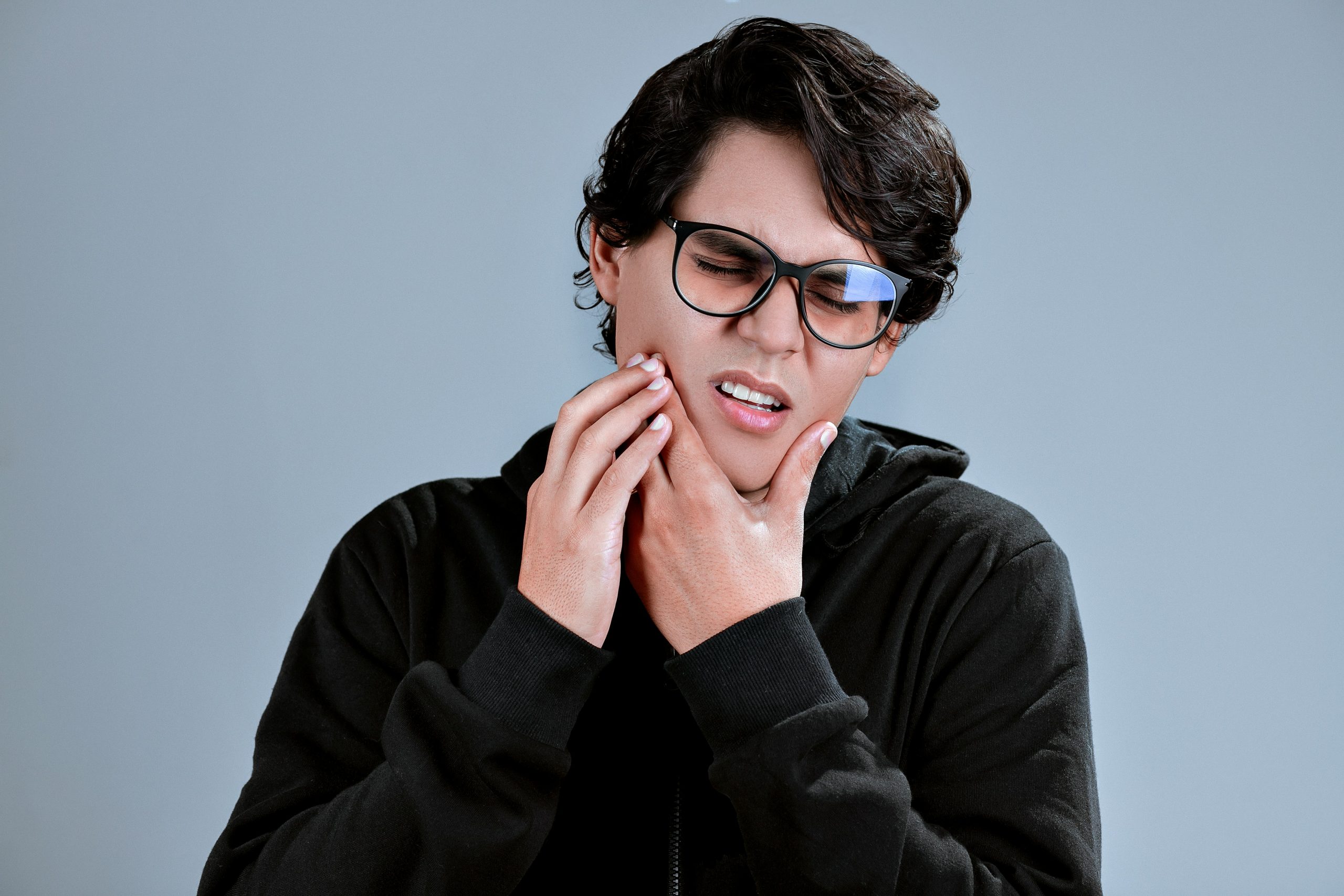
TMJ dysfunction looks different in every patient
Symptoms can range from localized jaw discomfort to widespread head, neck, and ear pain — and they often emerge or worsen gradually over time. If several of these sound familiar, your TMJ warrants a thorough evaluation.
Jaw Pain or Soreness
Aching, tenderness, or sharp pain in or around the jaw joint — often worse in the morning (from nighttime clenching) or after eating.
Clicking, Popping, or Grinding
Audible sounds when opening or closing the mouth. May be painless at first but can progress to pain and restricted motion if left unaddressed.
Limited Jaw Opening
Difficulty opening the mouth fully — or a jaw that “locks” open or closed. A normal mouth opening is approximately 40–50mm; many TMJ patients present well below that.
Headaches
TMJ-related headaches typically present at the temples, forehead, or base of skull. Often misdiagnosed as tension or migraine headaches — the jaw is rarely examined as a cause.
Ear Pain & Fullness
The TMJ sits directly in front of the ear canal. Dysfunction can create ear pain, a sensation of fullness, tinnitus (ringing), or muffled hearing — without any ear pathology.
Neck & Shoulder Tension
The muscles controlling the jaw extend into the neck and upper back. Chronic jaw tension creates a cascade of muscle guarding that travels down the cervical spine.
Morning Jaw Stiffness
Waking with jaw achiness, soreness, or stiffness is a hallmark sign of nighttime bruxism or clenching — often driven by unresolved cervical tension or stress.
Facial Pain
Diffuse aching across the cheek, temple, or side of the face — often originating from the masseter, temporalis, or pterygoid muscles in sustained contraction.
Tooth Sensitivity or Wear
Habitual grinding wears enamel unevenly and creates widespread dental sensitivity. Often discovered by a dentist — but the underlying muscle cause remains untreated.
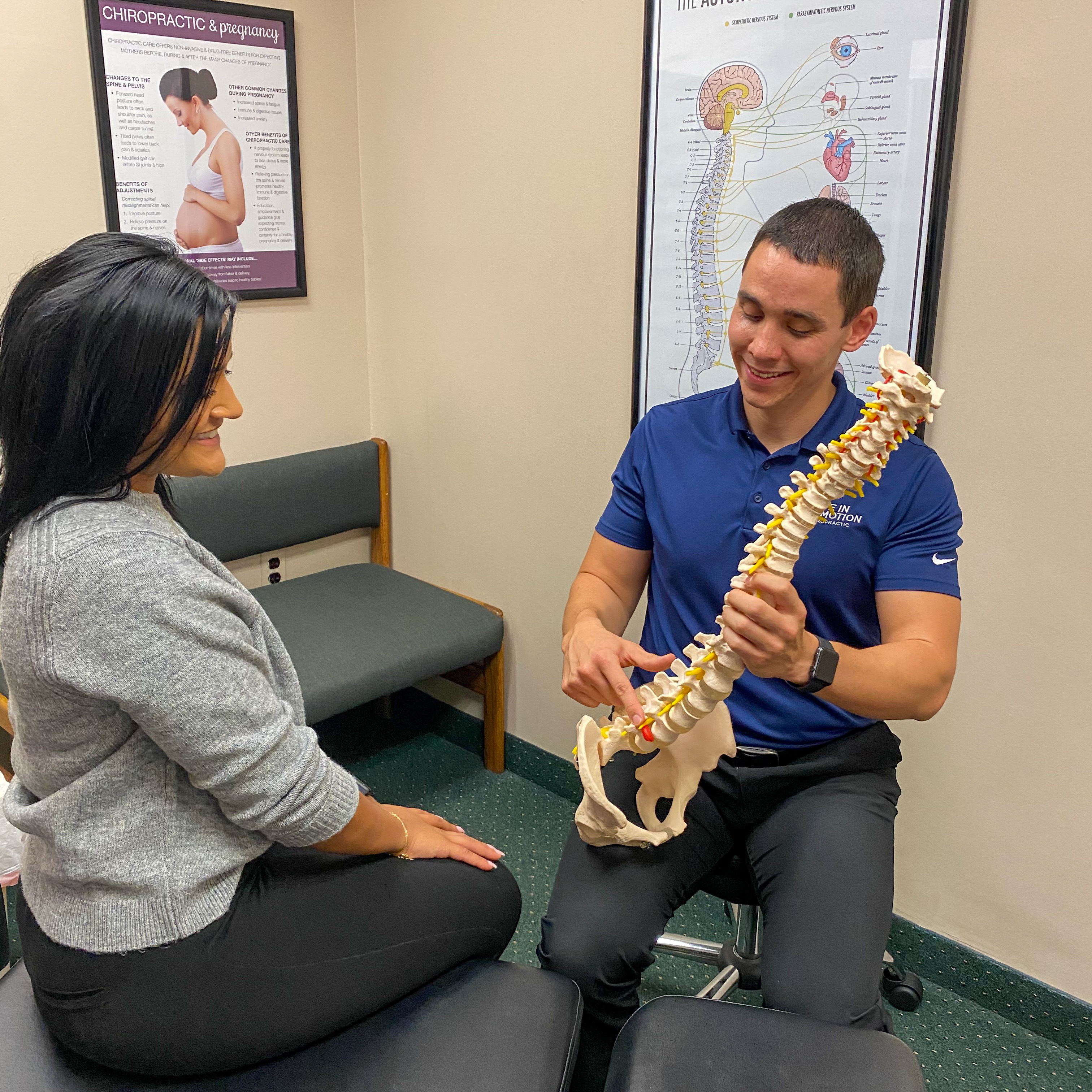
Why your jaw problem may actually start in your neck
The jaw and the upper cervical spine are not separate systems — they are mechanically, neurologically, and muscularly connected. The atlas (C1) and axis (C2) vertebrae sit directly beneath the skull and share muscles, ligaments, and nerve pathways with the structures controlling your jaw.
When the upper cervical spine is misaligned — from posture, old trauma, stress, or accumulated dysfunction — it creates muscle imbalance that pulls the jaw out of its ideal resting position. This uneven load on the TMJ, sustained over months or years, produces the clicking, pain, and restricted motion that patients eventually seek treatment for.
Forward head posture compounds this. For every inch the head shifts forward from its neutral position, the effective weight on the cervical spine and jaw increases — changing how the TMJ loads with every chew and swallow.
A 2024 review in the Journal of Oral Rehabilitation found that cervical rehabilitation — particularly upper cervical manipulation combined with targeted neck exercise — was effective in improving multiple pain outcomes in patients with myogenic TMJ disorders. Treating the jaw without addressing the cervical spine often leads to temporary relief that doesn’t hold.
Dr. Dockery’s approach evaluates the jaw and the full cervical spine as an integrated unit — identifying dysfunction at C1/C2, forward head posture patterns, and the neuromuscular imbalances that most providers miss when they focus solely on the joint.
“The jaw, skull, and upper cervical spine are a functionally interrelated unit — and treating TMJ dysfunction without examining all three is where most treatment plans fall short.”
A complete approach — jaw, neck, and nervous system
Dr. Dockery doesn’t apply a single protocol to every TMJ patient. Your exam findings determine your care plan — and that plan addresses the full system, not just the symptomatic joint.
Comprehensive Movement & Postural Assessment
Evaluating jaw mechanics, cervical range of motion, forward head posture, and neuromuscular control — to find the actual source of the dysfunction before any treatment begins.
Upper Cervical Chiropractic Adjustment
Precise adjustments at C1 and C2 restore proper alignment between the skull and cervical spine — directly improving the mechanical environment in which the TMJ operates.
Soft Tissue & Myofascial Work
Releasing the masseter, temporalis, pterygoid, and upper trapezius muscles that are chronically guarded in TMJ patients — reducing the constant tension load on the joint.
DNS-Informed Neuromuscular Rehab
Retraining deep cervical stabilizers and restoring proper head-neck-jaw coordination using Dynamic Neuromuscular Stabilization principles — so the pattern that caused the problem doesn’t return.
Class 4 Laser Therapy
Applied over the joint and surrounding musculature to reduce inflammation, accelerate tissue healing, and provide pain relief — particularly effective for patients with acute flare-ups or significant joint tenderness.
Home Exercise Prescription
Specific jaw, neck, and postural exercises — including chin retraction, deep neck flexion work, and jaw mobility drills — that extend the benefit of in-office treatment and prevent recurrence.
A thorough exam — including the cervical spine most providers skip
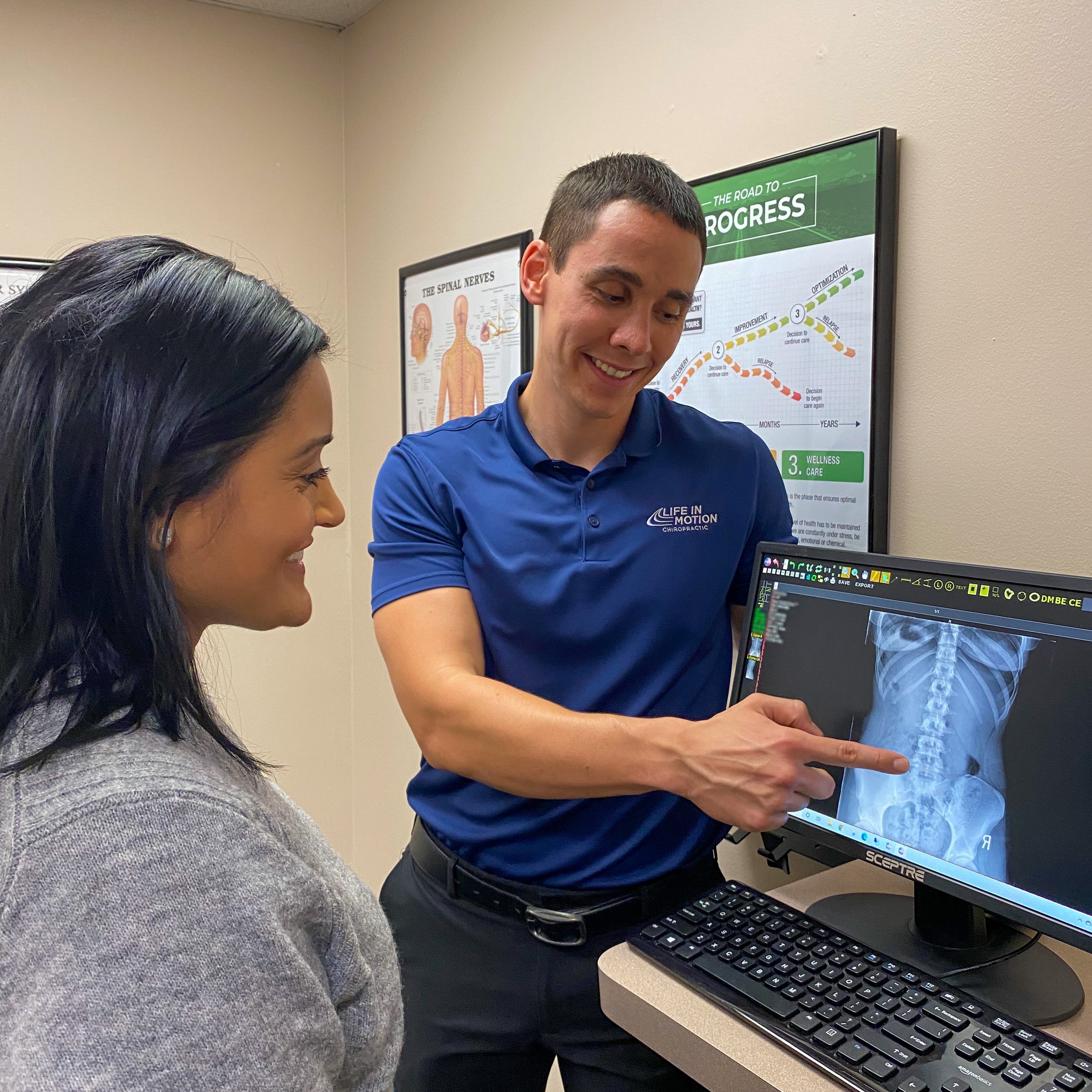
Your new patient visit includes a full consultation and comprehensive physical examination — not just of the jaw, but of your entire cervical spine, head posture, and neuromuscular coordination patterns.
When indicated, Dr. Dockery uses in-office digital X-rays to assess cervical alignment, lordosis, and intersegmental motion — providing objective information about the structural component of your dysfunction. Cervical X-rays are frequently revealing in TMJ cases, where reduced cervical lordosis and upper cervical joint restriction are common findings.
You’ll leave your first appointment understanding what’s actually going on — with a clear picture of the mechanical drivers behind your symptoms and a specific plan to address them.
This visit is especially valuable if you recognize yourself here
TMJ patients come from many different starting points. These are the presentations we see most often — and where a cervical-focused evaluation tends to be most revealing.
What patients say about their care at Life in Motion
Thanks to Dr. Dockery, the pain I had for years is nearly gone, my headaches are less often, and my back pain is no longer a daily problem. He also helped me with my TMJ pain. I’m grateful to have found a doctor that actually listens and helps me.
I leave this place feeling like a million bucks every time. Dr. Dockery is an outstanding chiropractor who has helped me from my jaw to my hips. You can tell he genuinely cares — I can’t wait for my next appointment.
Dr. Dockery is very thorough, patient, and enjoyable to work with. He truly cares about the wellbeing of his patients. My treatment plan is tailored to my specific needs with clear, measurable goals so I can see my progress.
Common questions about TMJ treatment
Can a chiropractor actually treat TMJ dysfunction?
Yes — and research supports it. A meta-analysis of 20 randomized controlled trials found chiropractic therapy significantly improved pain, maximum mouth opening, and disability in TMJ patients. Spinal manipulation and manual mandibular therapy were among the most effective techniques. Dr. Dockery’s approach addresses both the cervical spine and the jaw as an integrated system — which is where most chiropractic TMJ treatment outperforms isolated dental approaches.
Do I need to stop seeing my dentist for my TMJ?
No — and we don’t recommend it. Dental and chiropractic TMJ care are complementary, not competing. Your dentist addresses the occlusal (bite) component; Dr. Dockery addresses the cervical spine, muscular, and neuromuscular components. Patients who receive both often get better outcomes than those who receive either alone.
How many visits will I need before seeing improvement?
It varies by severity and how long the dysfunction has been present. Many patients notice meaningful improvement within 4–6 visits. Chronic cases that have been present for years typically require a longer course of care. After your initial exam, Dr. Dockery will give you a specific estimate based on your findings — not a vague open-ended plan.
Is TMJ treatment covered by insurance?
Most chiropractic insurance plans cover TMJ dysfunction as a musculoskeletal condition. Coverage varies by plan and specific diagnosis codes. Our team can verify your benefits before your first visit so there are no surprises.
Can TMJ dysfunction be caused by a car accident?
Yes — and it’s more common than most people realize. Whiplash injuries frequently involve the upper cervical spine (C1/C2), which directly affects TMJ mechanics. Many patients develop TMJ symptoms weeks or months after an accident as the initial neck injury progresses. If you’ve been in a collision and are now developing jaw symptoms, the connection should be evaluated — and it’s typically covered under your auto insurance.
What if my TMJ symptoms include ear pain or ringing?
Ear symptoms — pain, fullness, tinnitus — are common in TMJ patients because the joint sits directly adjacent to the ear canal and shares nerve supply through the trigeminal nerve. These symptoms often improve as the TMJ and cervical dysfunction resolves. If Dr. Dockery suspects a primary ear pathology, he will refer you to the appropriate specialist.
Ready to find out what’s actually causing your jaw pain?
Book your new patient exam online or give us a call. Same-day and Saturday appointments available. We’ll examine the full picture — and give you real answers.
27620 Five Mile Rd, Livonia, MI 48154 · Between Middlebelt and Inkster Road