
Life in Motion Chiropractic · Livonia, MI
Shoulder pain that won’t resolve
often isn’t just a shoulder problem.
Most shoulder pain involves more than the joint itself — the cervical spine, thoracic outlet, and surrounding soft tissue structures are almost always part of the picture. Dr. Dockery identifies where the problem actually starts, then treats it.
Why shoulder treatments often fail — and what to do instead
The shoulder is the most mobile joint in the body. That range of motion comes at a cost: it is also one of the most structurally vulnerable, relying on a precise coordination between four rotator cuff muscles, the shoulder blade (scapula), the acromioclavicular joint, the thoracic spine, and — critically — the cervical spine above.
When shoulder pain is treated in isolation — whether with ice, NSAIDs, or exercises focused only on the shoulder joint — the underlying pattern driving the dysfunction is rarely addressed. This is why so many patients cycle through partial relief, then relapse, then partial relief again without ever fully recovering.
An accurate diagnosis has to come first. Before any treatment is recommended, Dr. Dockery performs a comprehensive shoulder and cervical evaluation to answer two critical questions: where is this pain actually coming from, and what specific structures are involved? Only then can treatment be targeted, efficient, and lasting.
The cervical-shoulder overlap: The nerves that supply the shoulder, arm, and hand emerge from the cervical spine between C4 and C8. Compression, restriction, or inflammation at any of these levels can produce shoulder pain, weakness, or altered sensation — even when the shoulder joint itself is structurally normal. This is why a comprehensive exam always includes the neck. Learn more about cervical spine assessment →

Treatment of shoulder pain at Life in Motion involves the joint itself, the surrounding soft tissue, and the thoracic and cervical spine — because shoulder function depends on all of them.
Shoulder conditions treated at Life in Motion
These are the most common shoulder presentations we see. Many patients have more than one simultaneously — which is why a thorough exam is essential before any treatment begins.
Rotator Cuff Tendinopathy
Degeneration or irritation of the rotator cuff tendons causing pain with reaching overhead, behind the back, or across the body. Often the result of repetitive strain, postural load, or muscle imbalance — and highly responsive to conservative care before it progresses to a tear.
Shoulder Impingement Syndrome
Compression of the supraspinatus tendon and subacromial bursa between the humerus and acromion. Produces a painful arc of motion — typically between 60° and 120° of arm elevation. One of the most common shoulder presentations and one of the most treatable without surgery.
Frozen Shoulder (Adhesive Capsulitis)
Progressive stiffening of the shoulder capsule causing severe restriction in all planes of motion. Progresses through distinct phases — “freezing,” “frozen,” and “thawing.” Chiropractic care and laser therapy can significantly reduce duration and severity at each stage.
Cervically-Referred Shoulder Pain
Pain that appears to originate in the shoulder but is actually generated by nerve compression or joint restriction in the cervical spine. Often accompanied by neck stiffness, arm tingling, or pain that worsens with head and neck movement. Frequently mistaken for a rotator cuff injury.
Acromioclavicular (AC) Joint Sprain
Injury to the joint at the top of the shoulder where the clavicle meets the acromion — common in contact sports, falls, and direct-impact injuries. Conservative management addresses pain, restores mobility, and prevents chronic AC joint dysfunction.
Shoulder Instability & Muscle Imbalance
Weakness or poor motor control in the rotator cuff and scapular stabilizers allows the humeral head to migrate out of ideal position, stressing the surrounding tissue. A primary cause of recurrent shoulder pain in athletes and desk workers alike.
When conservative care isn’t the right first step
Full-thickness rotator cuff tears, acute fractures, shoulder dislocations, and suspected labral tears typically require orthopedic imaging and surgical consultation before conservative care begins. If your exam findings suggest any of these, Dr. Dockery will refer you to the appropriate specialist and can co-manage your care. When in doubt, getting an accurate diagnosis is always the right first step — and that’s exactly what your first visit is designed to provide. The American Academy of Orthopaedic Surgeons provides helpful guidance on when surgical evaluation is indicated.
“We don’t treat the shoulder in isolation — we treat the shoulder as part of the full kinetic chain. The cervical spine, thoracic spine, and scapular stabilizers all feed into shoulder function, and a plan that ignores them will always fall short.”
Our approach to shoulder pain relief
Once the source of your shoulder pain is clearly identified, treatment is built around your specific findings — not a generic shoulder protocol.

Joint Manipulation & Mobilization
Chiropractic adjustments to the glenohumeral joint, acromioclavicular joint, and surrounding spinal segments (cervical and thoracic) restore proper joint mechanics, reduce nerve irritation, and address the structural dysfunction that is generating or perpetuating your shoulder pain. Multiple low-force and instrument-assisted techniques are available for patients who prefer a gentler approach.
Learn about our chiropractic techniques →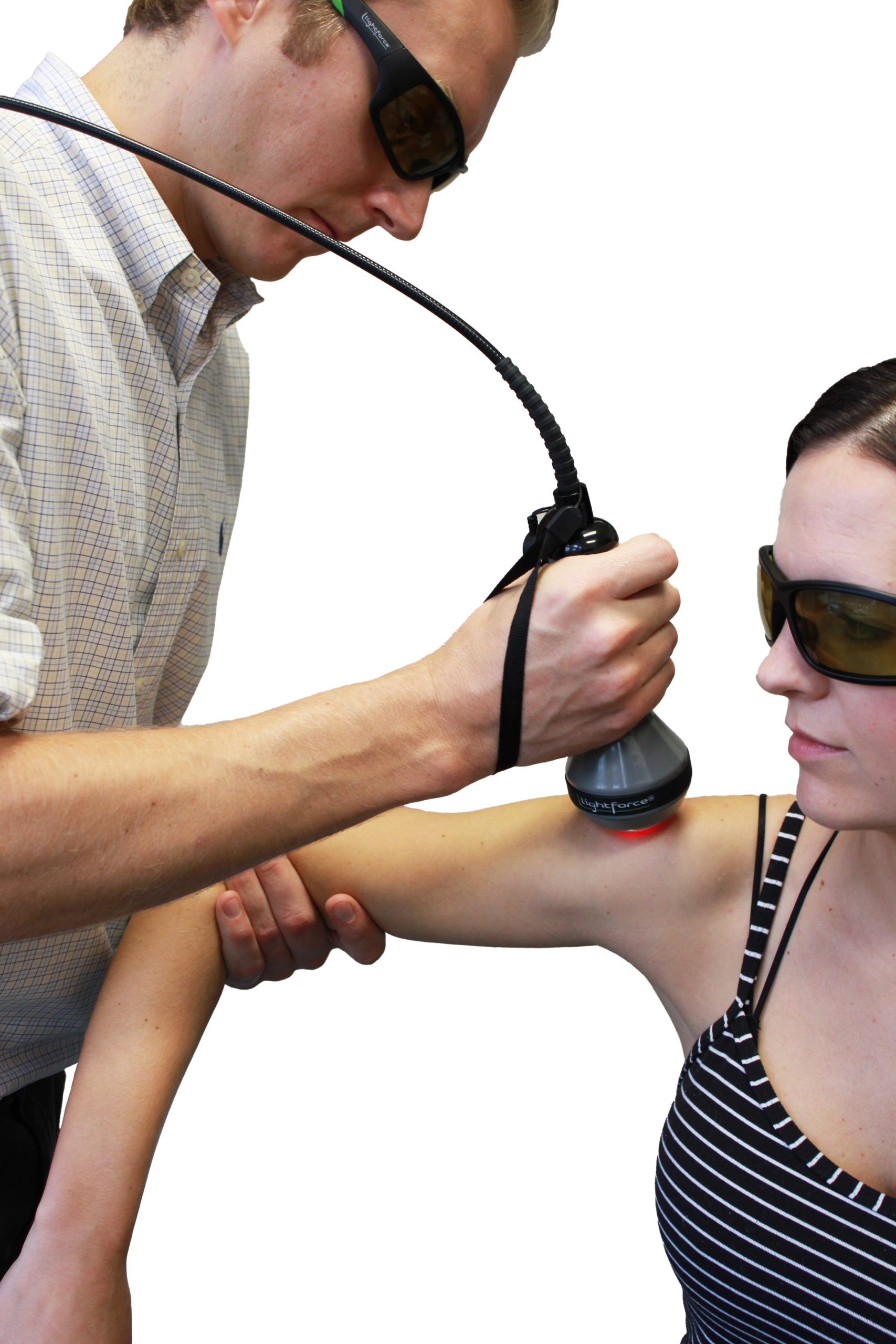
Class 4 Laser Therapy
Our LightForce 15W Class IV laser is one of the most effective tools available for shoulder pain — particularly rotator cuff tendinopathy, impingement, and frozen shoulder. It penetrates deep into the joint capsule and surrounding tissue to reduce inflammation, promote tendon and tissue repair, release pain-mediating endorphins, and accelerate healing at the cellular level. Many patients notice meaningful improvement within just a few sessions.
Learn about Class 4 Laser Therapy →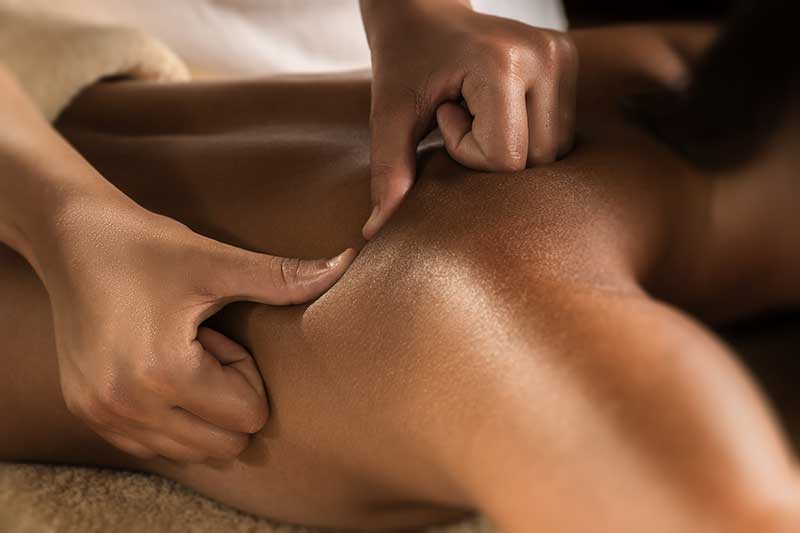
Soft Tissue & Myofascial Release
The rotator cuff muscles, upper trapezius, levator scapulae, and pectoral muscles frequently develop tightness and trigger points that contribute directly to shoulder impingement and restricted motion. Targeted soft tissue work and myofascial release address these patterns directly — often providing rapid reduction in pain and improved range of motion even before adjustments take full effect.
Learn about massage therapy →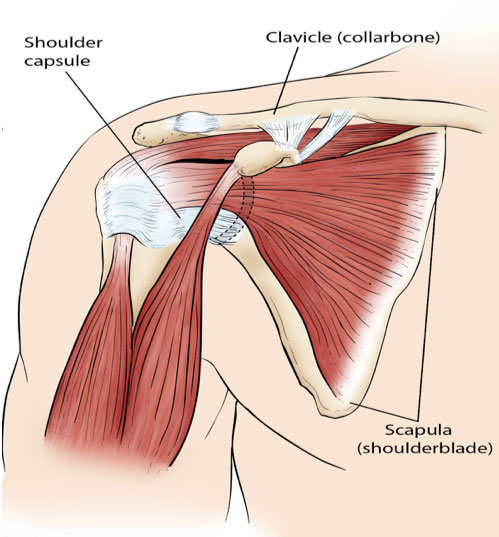
Shoulder Rehabilitation & Corrective Exercise
Shoulder pain almost always involves a component of muscular imbalance or poor motor control — particularly in the rotator cuff and scapular stabilizers. Dr. Dockery prescribes evidence-based corrective exercise targeting the specific deficit identified in your exam. These are taught in-office, demonstrated correctly, and available to review anytime through our Rehab Exercise Library. This is what prevents the pain from coming back.
Shoulder pain affects people at every activity level
These are the most common patients we see for shoulder pain — from athletes to desk workers to post-injury recovery cases.
Athletes and gym-goers with overuse injuries from throwing, swimming, weightlifting, or overhead sports
Desk workers and remote employees whose rounded shoulder posture drives chronic upper back and shoulder strain
Patients with frozen shoulder who’ve been told to “wait it out” — when targeted treatment can shorten the timeline significantly
Auto accident patients with shoulder, upper back, or arm pain following a collision
Manual laborers, tradespeople, and drivers with repetitive strain in the shoulder and rotator cuff
Anyone whose shoulder treatment has focused only on the shoulder, with incomplete or temporary results
Is conservative care effective for shoulder pain?
Yes — particularly when treatment addresses the full structural picture, not just the symptomatic shoulder. The research consistently supports conservative management as the appropriate first-line approach for the majority of shoulder presentations, including impingement, rotator cuff tendinopathy, and frozen shoulder.
Importantly, early conservative care also improves outcomes for patients who ultimately do require surgery — with better pre-operative function leading to faster post-operative recovery. Starting with the least invasive, evidence-supported approach is always the right clinical decision unless acute structural damage makes it otherwise.
Rotator Cuff Tendinopathy
A 2019 systematic review in the British Journal of Sports Medicine found that combined exercise and manual therapy produced clinically meaningful improvements in shoulder pain and function — comparable to or exceeding corticosteroid injection outcomes at 3 and 6 months.
Source: Br J Sports Med — Rotator Cuff ReviewShoulder Impingement
A landmark JAMA trial (2018) found that surgery for subacromial impingement was no more effective than sham surgery or structured physical therapy at 6 months and 1 year — strongly supporting conservative care as the preferred approach for most impingement cases.
Source: JAMA — CSAW Trial (2018)Frozen Shoulder (Adhesive Capsulitis)
Research published in the Journal of Orthopaedic & Sports Physical Therapy supports multimodal conservative treatment — including manual therapy and exercise — as effective for improving range of motion and reducing pain in all phases of adhesive capsulitis.
Source: JOSPT — Adhesive Capsulitis CPGCervicogenic Shoulder Pain
A Cochrane-adjacent systematic review found that cervical spine manipulation significantly reduces referred arm and shoulder pain in patients with cervical radiculopathy — validating the importance of spinal assessment in shoulder pain workups that don’t respond to local shoulder treatment.
Source: NIH PMC — Cervical Manipulation ReviewWhat patients say about care at Life in Motion
I came in with intense SI joint pain, and from the first visit Dr. Dockery was incredibly thorough — he explained what was going on, adjusted me with care, and gave me the right exercises to support my recovery. He treats the root of the issue and empowers you with the tools to heal.
I’d never been to a chiropractor before and was nervous, but Dr. Dockery exceeded all my expectations. I love that my treatment plan is tailored to my specific needs with clear, measurable goals so I can actually see my progress.
Dr. Dockery is outstanding. He takes the time to teach and truly cares. I always leave with useful information and exercises to continue my progress at home.
You don’t have to live with pain. Dr. Dockery is knowledgeable, professional, and kind. More than once, he’s restored my freedom of movement and quality of life. I would recommend him to my own family and friends.
Read more patient testimonials →Shoulder pain FAQs
Can a chiropractor actually treat shoulder pain?
Yes. Chiropractors are trained to assess and treat musculoskeletal shoulder conditions including rotator cuff tendinopathy, impingement, frozen shoulder, and shoulder pain originating from the cervical or thoracic spine. At Life in Motion, every shoulder case begins with a comprehensive structural exam to identify the source before any treatment is recommended. See our full FAQ →
How do I know if my shoulder pain is coming from my neck?
Several signs suggest a cervical or thoracic spine source: pain that travels from the neck into the shoulder or arm, numbness or tingling in the hand, shoulder pain that worsens with neck movement, or pain that hasn’t responded to treatments focused only on the shoulder itself. A thorough neurological and orthopedic exam — which Dr. Dockery performs at your first visit — differentiates local shoulder pathology from referred pain originating in the spine. Learn more about cervical spine assessment →
What is shoulder impingement and can it be resolved without surgery?
Shoulder impingement occurs when the rotator cuff tendons are compressed in the subacromial space during arm elevation. A landmark 2018 JAMA study found that surgery for impingement was no more effective than conservative management at 6 and 12 months — making conservative care the clear first-line approach for most impingement cases. Treatment at Life in Motion addresses joint mechanics, muscular imbalance, and posture — the actual drivers of impingement.
Can chiropractic help frozen shoulder?
Yes, particularly in the earlier phases. Frozen shoulder (adhesive capsulitis) involves progressive stiffening of the joint capsule. Chiropractic mobilization, laser therapy, and targeted exercise can reduce pain, improve range of motion, and accelerate recovery through each phase of the condition — often significantly shortening the overall timeline.
Will I need an MRI or imaging before treatment?
Not always. Most shoulder conditions can be assessed and treated conservatively without advanced imaging. If X-rays are clinically indicated, we take and review them on-site the same day. For suspected rotator cuff tears, labral pathology, or structural damage, Dr. Dockery will coordinate appropriate imaging or referral and can co-manage your care alongside your primary provider or orthopedic specialist.
Do you accept insurance for shoulder pain treatment?
Yes, we accept most major insurance plans. Check your coverage here →
Clinical References & External Resources
- Beard DJ, et al. “Arthroscopic subacromial decompression for subacromial shoulder pain (CSAW): a multicentre, pragmatic, parallel group, placebo-controlled, three-group, randomised surgical trial.” Lancet. 2018;391(10118):329–338. Lancet CSAW Trial
- Haik MN, et al. “Effectiveness of physical therapy treatment of clearly defined subacromial pain: a systematic review of randomised controlled trials.” Br J Sports Med. 2016;50(18):1124–1134. BMJ — Subacromial Review
- Page MJ, et al. “Manual therapy and exercise for rotator cuff disease.” Cochrane Database Syst Rev. 2016. Cochrane — Rotator Cuff
- American Academy of Orthopaedic Surgeons. “Rotator Cuff Tears — Diagnosis and Treatment.” AAOS OrthoInfo
- National Institute of Neurological Disorders and Stroke. Shoulder and Arm Pain (Brachial Neuritis). NIH NINDS
Stop guessing at the shoulder. Find the source.
Same-day and Saturday appointments available. Your comprehensive shoulder and cervical evaluation starts at your first visit.
27620 Five Mile Rd, Livonia, MI 48154 · Mon–Thu & Saturday by Appointment