
Banded Clam Exercise | Glute Activation & Hip Stability | Life in Motion Chiropractic Livonia MI

Banded Clam Exercise
for Glute Activation & Hip Stability

A targeted glute and hip stability exercise prescribed by Dr. Dockery to activate the glute medius, improve pelvic control, and address the compensation patterns that contribute to low back pain, IT band tightness, and poor movement mechanics.
5–10 min/day Resistance band required Beginner to intermediate Livonia, MI
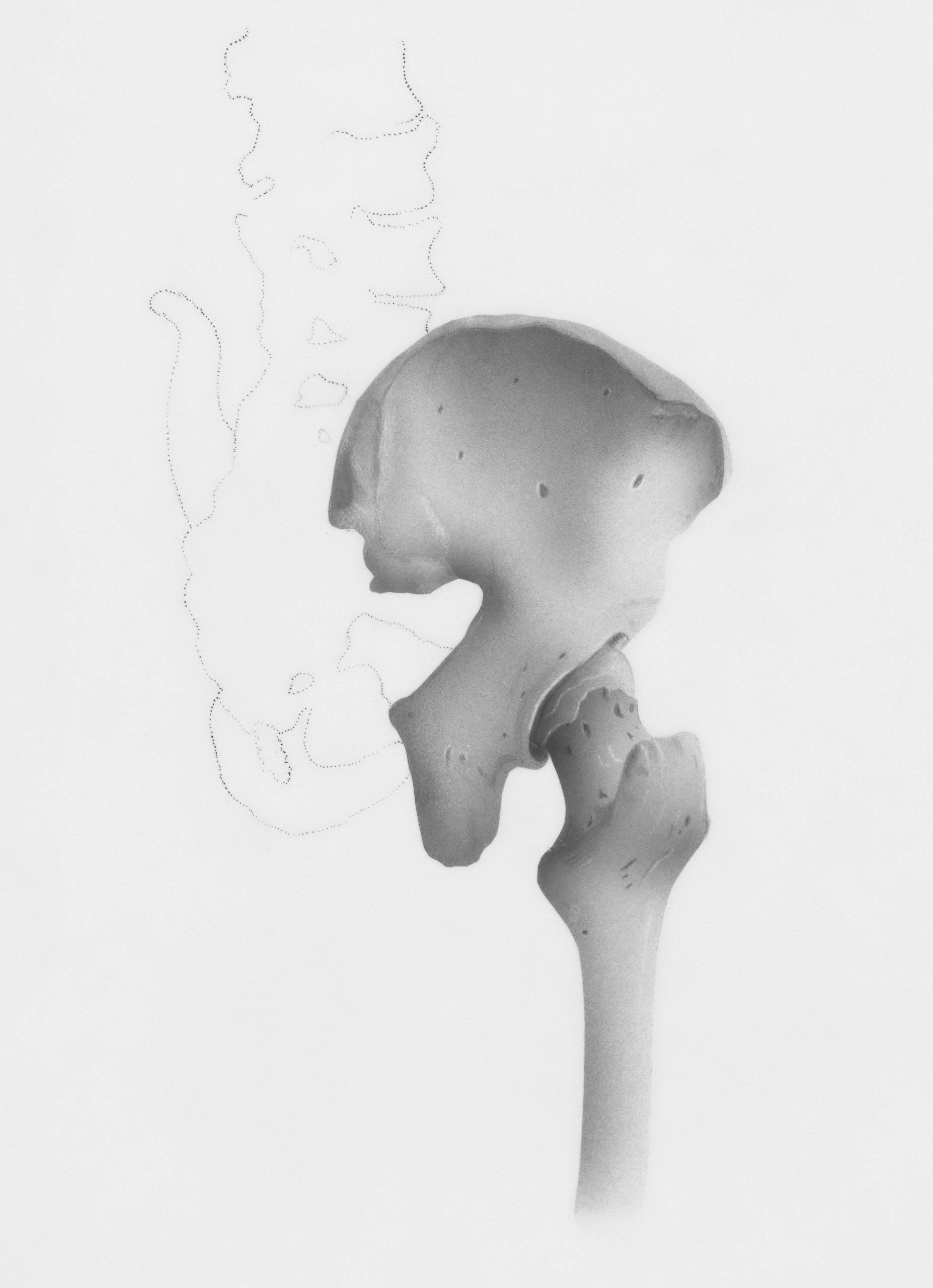
Hip and pelvis anatomy — glute medius, hip stability, and banded clam exercise at Life in Motion Chiropractic Livonia MI

What Is the Banded Clam Exercise?

The Banded Clam is a side-lying hip abduction exercise performed with a resistance loop band around the knees. It specifically targets the glute medius — the mid-portion of the gluteal muscle group that runs along the outer hip — which plays a critical role in stabilizing the pelvis during every step you take.

When the glute medius is underactive or inhibited (an extremely common finding in patients with low back pain, hip pain, and movement dysfunction), the body compensates by overusing the IT band, TFL, and lumbar erectors to stabilize the pelvis. Over time, this compensation pattern creates the tightness, overload, and pain that patients feel through the hip, outer thigh, SI joint, and low back. According to research on glute medius function, weakness in this muscle is consistently associated with both low back pain and lower extremity injury.

The banded clam retrains the glute medius in a position that removes compensatory movement, making it one of the most efficient glute activation exercises available.

Clinical note: The glutes are commonly the most underutilized muscles in patients with low back pain. Patients often feel this exercise in the outer thigh or hip flexor initially — a sign of compensation. Slowing the movement down and focusing on squeezing the posterior (back) portion of the hip changes the activation pattern significantly. Dr. Dockery will assess your glute function and prescribe appropriate progressions.

Common Conditions This Exercise Addresses

Low back pain & instability
Weak or underactive glutes
Hip & pelvic control deficits
IT band syndrome
Poor walking & running mechanics
SI joint dysfunction
Hip impingement & labral issues
Athletic injury prevention

Why the glute medius matters: Every time you take a step, your stance-leg glute medius must fire to keep the pelvis level. When it doesn’t, the pelvis drops to the opposite side (Trendelenburg pattern), forcing the low back, IT band, and hip flexors to absorb that load — which is why glute weakness is one of the most common root causes of low back pain and hip pain in active patients.

Step-by-Step Instructions

Slow and controlled is more effective than fast. If you feel this primarily in the outer thigh or front of the hip rather than the back of the hip/glute region, you are compensating with the IT band and TFL. Reset your position and slow down.

1

Set up with the band in place

Place a resistance loop band around both legs just above the knees. Lie on your side on a firm surface — mat or floor — with your hips stacked directly on top of each other and your body in a straight line or slightly bent at the hips.

2

Bend hips and knees to approximately 90 degrees

Draw your knees up to about hip height with hips and knees bent to roughly 90 degrees. Keep your feet stacked together throughout the exercise — this is the clam’s closed position. Let your head rest naturally on your bottom arm.

3

Create gentle abdominal pressure

Before moving, gently create light 360-degree abdominal pressure — expanding the belly outward slightly. This stabilizes the pelvis and prevents it from rocking during the movement.

4

Slowly lift the top knee against the band

Keeping the feet together and pelvis still, slowly rotate the top knee upward against the resistance of the band — like a clamshell opening. Focus on squeezing the back of the hip, not pulling from the outer thigh. Lift only as far as you can without rolling the pelvis backward.

5

Lower slowly and repeat

Lower the knee back down with the same control as the lift — do not let it drop. You do not need to fully close the knees between reps; maintaining slight tension keeps the glute engaged. Complete the prescribed number of reps, then switch sides.

Common compensation to watch for: Most patients initially perform this movement using the IT band and TFL (outer hip) instead of the glute medius (back of hip). Signs include feeling a burn in the outer thigh, the pelvis rolling backward, or the movement feeling too easy. Slowing down and consciously squeezing the posterior hip corrects this pattern.

Key Technique Points

Pelvis stays still — if you feel your top hip rolling backward as your knee lifts, you have gone beyond your controlled range; reduce the arc
Feel it in the back of the hip, not the outer thigh — squeeze the posterior gluteal region; if you only feel the outer thigh, reset and move more slowly
Feet stay together throughout — the feet act as the hinge point of the clam; separating them changes the mechanics
Slow is better than fast — the glute medius is a stabilizer, not a prime mover; it responds better to slow, controlled activation than momentum-based reps
Maintain abdominal pressure throughout the set — core engagement prevents the pelvis from becoming unstable under the hip’s load
Don’t fully close between reps — maintaining a few degrees of band tension keeps the glute medius slightly loaded throughout the set

Watch the Technique

Banded Clam Exercise — Life in Motion Chiropractic

Dr. Dockery demonstrates proper setup, band placement, pelvic stability cues, and how to identify the difference between glute medius activation and IT band compensation.

Why This Exercise Works

Directly activates the glute medius — the most commonly inhibited hip stabilizer in patients with low back, hip, and knee pain
Improves pelvic stability during gait — a stronger glute medius prevents the Trendelenburg drop pattern that overloads the low back and IT band with every step
Reduces IT band tension — when the glute medius fires properly, the TFL and IT band no longer need to compensate as primary pelvic stabilizers, allowing them to relax
Addresses a root cause of low back pain — poor glute activation forces the lumbar erectors and SI joint ligaments to absorb loads the glutes should be managing
Scalable resistance — lighter bands for activation and re-education, heavier bands for strength development as the neuromuscular pattern improves
Simple and equipment-minimal — requires only a resistance loop band, takes 5 minutes, and can be performed at home as part of a daily maintenance routine

Frequently Asked Questions

How many reps and sets should I do?
Dr. Dockery will prescribe a specific volume based on your presentation. A common starting point is 2–3 sets of 15–20 slow, controlled reps per side. Quality matters far more than quantity — a perfect 15-rep set is more effective than 30 sloppy reps driven by the IT band.
I only feel this in my outer thigh, not my glute. What’s wrong?
This is one of the most common findings in patients with inhibited glutes. It means the TFL (tensor fascia latae) and IT band are compensating for the glute medius. Try slowing the movement down significantly, reducing your range, and consciously squeezing the back and outer portion of the buttock as you lift. In some cases, Dr. Dockery may use hands-on techniques to improve glute activation before prescribing this exercise independently.
What resistance band should I use?
Start with a light resistance band that allows you to feel the glute working without causing the pelvis to rock or forcing compensation. If the exercise feels too easy and you’re genuinely feeling it in the glute medius, progress to a medium band. Fabric loop bands tend to stay in place better than latex ones for this exercise.
How does this exercise help with IT band pain?
IT band syndrome is rarely caused by the IT band itself — it’s typically caused by the compensation pattern that develops when the glute medius is weak. When the glutes aren’t doing their job, the TFL and IT band are forced to stabilize the pelvis, creating excessive tension and friction. Properly activating the glute medius with exercises like the banded clam removes this compensatory demand on the IT band, allowing the tension to resolve. See also: Hip & SI Joint Pain.
Can I do this exercise if I have hip impingement?
The banded clam is generally well tolerated for hip impingement because it works in a range that doesn’t provoke impingement symptoms. However, if you feel pinching in the front of the hip during the movement, reduce your range or adjust your hip flexion angle. Have Dr. Dockery assess your hip before adding this exercise if you have a known impingement diagnosis.
How does this fit into a broader rehabilitation program?
The banded clam is typically used as an activation and re-education exercise in the early and mid stages of a hip and low back rehabilitation program. Once the glute medius can be reliably activated in the side-lying position, Dr. Dockery will typically progress to weight-bearing glute exercises — lateral band walks, single-leg deadlifts, and functional hip stability patterns that transfer directly to standing, walking, and sport.

This content is for educational purposes only. Stop if symptoms worsen or pain develops, and consult Dr. Dockery if you are unsure whether this exercise is appropriate for your condition.

Activate Your Glutes & Protect Your Hips in Livonia, MI

The banded clam is most effective as part of a complete hip stabilization and rehabilitation program. Dr. Dockery serves patients throughout Livonia, Farmington Hills, Redford, Plymouth, and greater Wayne County.

Or call us at 734-427-6333