

Toe Threading Mobilization
for Foot Mobility & Activation
A gentle foot mobilization drill prescribed by Dr. Dockery to restore movement through the toe joints, wake up the intrinsic foot muscles, and improve the sensory foundation that balance, gait, and lower extremity stability all depend on.
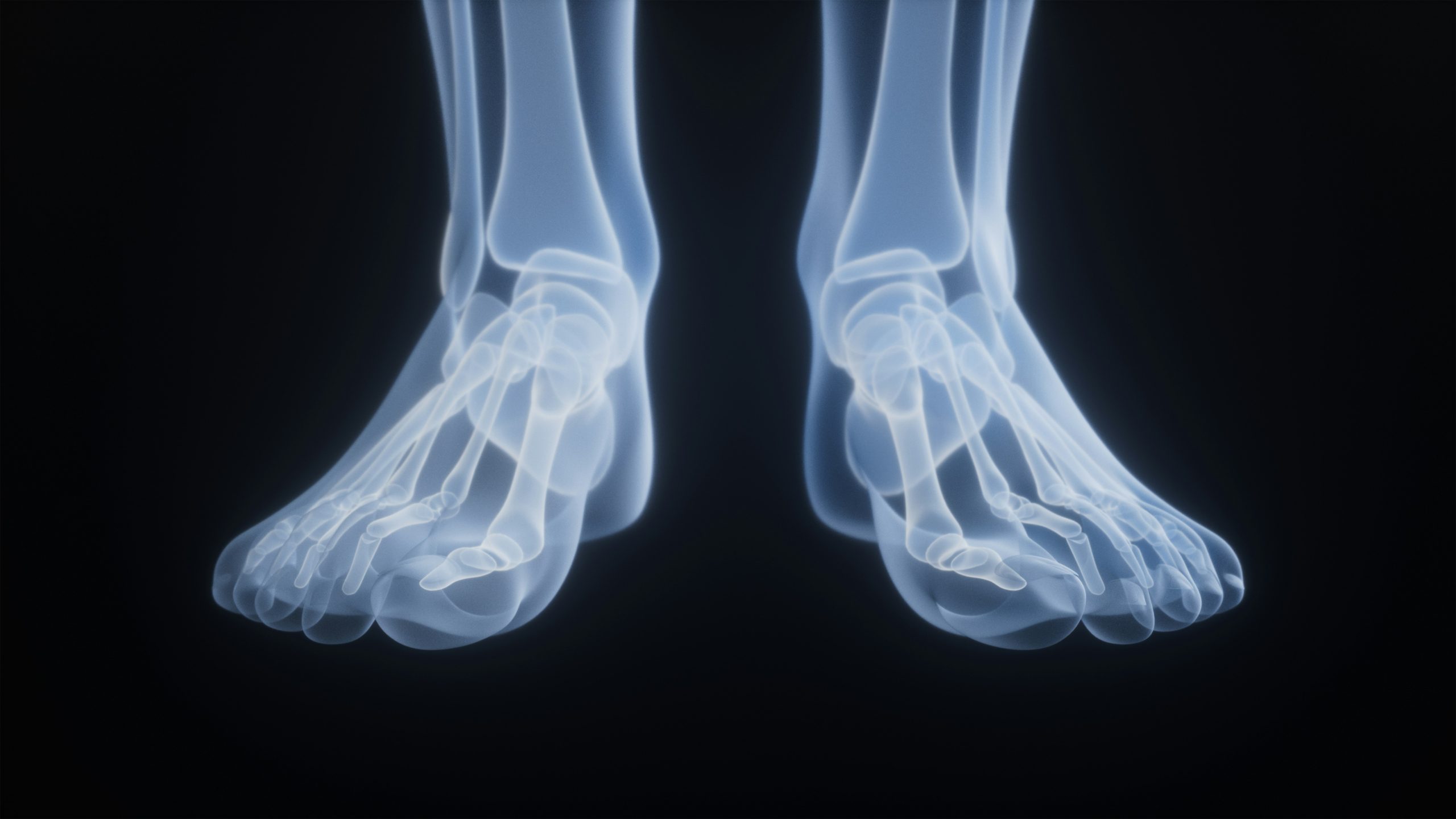
What Is the Toe Threading Mobilization?
The Toe Threading Mobilization is a hands-on foot mobility drill in which the fingers are threaded between the toes to gently gap, distract, and rotate the metatarsophalangeal (MTP) joints — the joints where the toes meet the forefoot. By introducing controlled movement through these often-stiff joints, the exercise restores range of motion, activates the intrinsic muscles of the foot, and improves sensory input from the foot to the nervous system.
The foot contains 26 bones, 33 joints, and over 100 muscles, tendons, and ligaments — all working together to absorb load, adapt to terrain, and generate the stable platform that every movement above it depends on. According to Physiopedia’s foot anatomy overview, restricted mobility in the toe and forefoot joints is a common finding in patients with plantar fasciitis, metatarsalgia, bunion pain, and broader lower extremity issues.
When the toes become stiff — from years in constrictive footwear, inactivity, or injury — the foot loses the ability to spread and grip the ground naturally. This forces the ankle, knee, and hip to compensate, creating the chain of dysfunction that Dr. Dockery often identifies in patients with chronic lower extremity or low back problems.
Clinical note: This mobilization is frequently prescribed as a warm-up before DNS single-leg stance work, banded clam exercises, balance training, or any rehabilitation that requires the foot to function as a stable base. Improving foot mobility and sensory awareness at the ground level improves the quality of every exercise performed above it.
Common Conditions This Exercise Addresses
Why the foot is the foundation: The sole of the foot contains one of the highest concentrations of sensory nerve endings in the entire body. When foot mobility is restricted — especially from years in shoes with narrow toe boxes — the brain receives a reduced, distorted signal from the ground. This impairs balance, delays muscle activation timing, and forces compensations up the kinetic chain into the ankle, knee, hip, and low back. Restoring toe mobility is one of the fastest ways to improve the quality of sensory information the nervous system receives.
Step-by-Step Instructions
Perform this exercise barefoot whenever possible. Socks reduce the tactile feedback between fingers and toes that makes the mobilization more effective. Sit comfortably on a chair or on the floor — whatever allows you to reach your foot easily without straining.
Sit and cross one foot over the opposite knee
Find a comfortable seated position — a chair or the floor both work. Cross the foot you’re working on over the opposite knee so the sole is facing up and you have easy access to both the top and bottom of the foot.
Stabilize the heel with the same-side hand
Use your same-side hand (right hand for right foot) to gently cup and stabilize the heel. This prevents excessive movement at the ankle and keeps the mobilization focused on the toe joints rather than the whole foot.
Thread the fingers of the opposite hand between the toes
Use the fingers of your opposite hand (left hand for right foot) to slide between the toes — one finger per space. Work the fingers as deeply between the toes as is comfortable without forcing. Many patients with stiff toes can only get the fingertips in at first; that’s fine — this improves with practice.
Gently spread and gap the toes
Once the fingers are threaded, apply a gentle spreading pressure to separate the toes slightly. You should feel a mild stretching sensation through the forefoot and toe joints — not pain. Hold the spread for 2–3 seconds to allow the tissues to relax into the new position.
Apply light traction and perform slow circular rotations
With the fingers threaded and toes gently spread, apply a very light pulling traction away from the foot (distraction). Then begin slow, controlled circular movements — rotating the forefoot and toes as a unit through their available range. Perform approximately 10 rotations in each direction. The movement should be smooth and within comfortable limits.
Switch to the other foot and repeat
After completing the rotations on the first foot, switch feet and repeat the entire sequence. Most patients find one foot is noticeably stiffer than the other — this is normal and improves over time.
Key Technique Points
Watch the Technique
Why This Exercise Works
Frequently Asked Questions
This content is for educational purposes only. Stop if symptoms worsen or pain develops, and consult Dr. Dockery if you are unsure whether this exercise is appropriate for your condition.
Improve Your Foot Mobility & Movement Quality in Livonia, MI
Foot mobility is the foundation everything else is built on. Dr. Dockery serves patients throughout Livonia, Farmington Hills, Redford, Plymouth, and greater Wayne County.