
Lumbar Cat Camel with Breath
for Low Back Mobility & Stiffness Relief
A gentle quadruped spinal mobility exercise prescribed by Dr. Dockery that pairs controlled lumbar flexion and extension with diaphragmatic breathing — using breath to drive spinal movement, reduce muscular guarding, and improve low back mobility without stressing already-irritated tissues.
What Is the Lumbar Cat Camel with Breath?
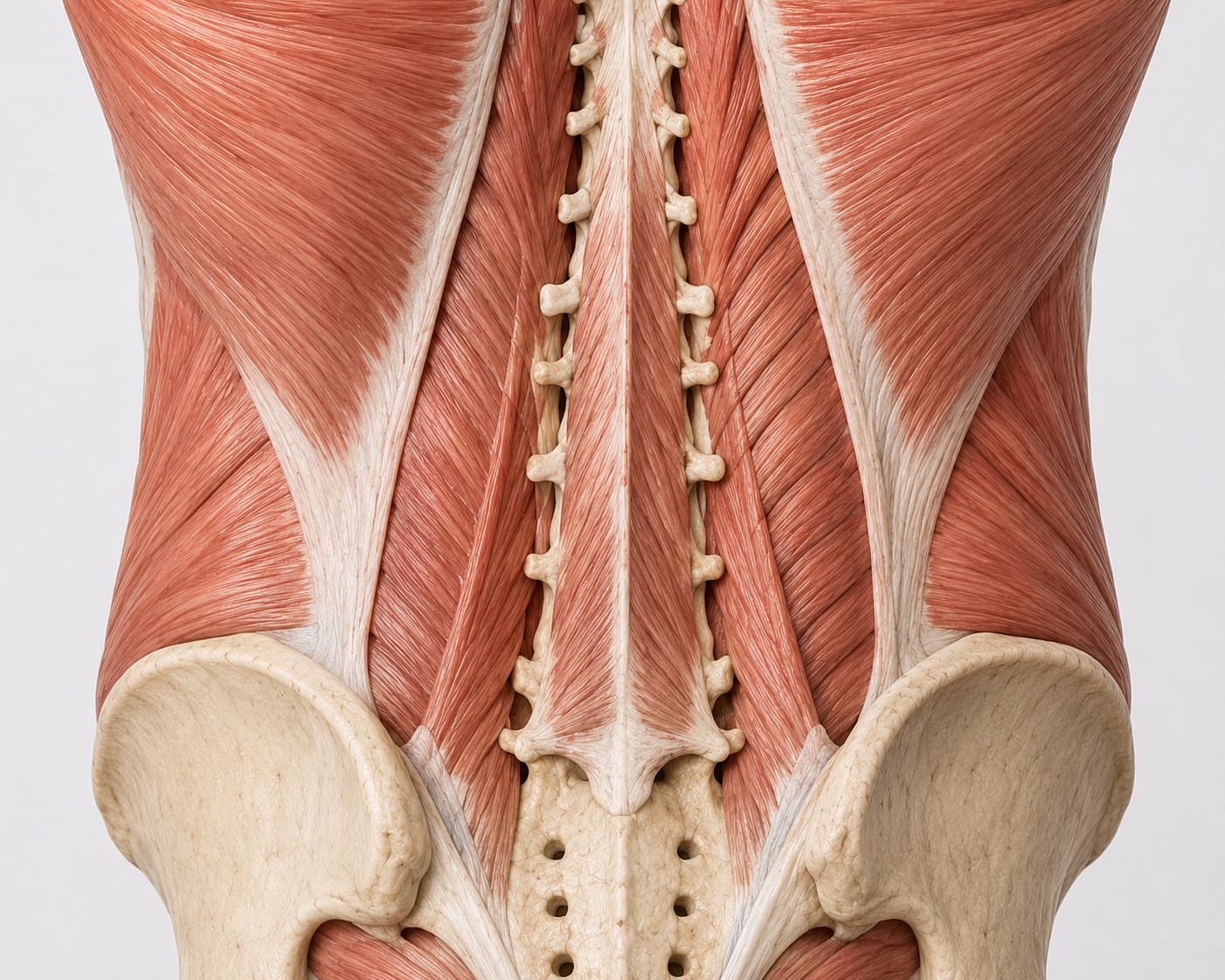
The Lumbar Cat Camel with Breath is a quadruped (all-fours) spinal mobility exercise that moves the lumbar spine through gentle flexion — rounding the low back toward the ceiling like a cat arching — while coordinating each movement phase with a specific breath pattern. Unlike the standard cat-camel, which is performed as a range-of-motion drill, this variation uses breath to drive the movement rather than arm strength, making it significantly more effective for reducing muscular guarding and improving mobility in a truly pain-safe way.
The breathing component works through the mechanics of the diaphragm and pelvic floor: when you inhale deeply into the abdomen, intra-abdominal pressure naturally creates a gentle posterior pelvic tilt that initiates lumbar flexion from the inside out. This is fundamentally different from actively forcing the back into flexion, which can increase guarding. The breath-driven approach uses a physiological pathway the nervous system already recognizes as safe, making it particularly well-tolerated during acute low back flare-ups when any active movement feels threatening.
According to Mayo Clinic’s overview of low back pain management, gentle mobility exercises that reduce muscular guarding and restore normal spinal movement patterns are among the most evidence-supported early interventions for both acute and chronic low back pain — and this exercise is specifically designed for exactly that purpose.
Structures mobilized: Lumbar intervertebral joints and facet joints, lumbar paraspinals (multifidus, erector spinae), thoracolumbar fascia, and quadratus lumborum. The breath component also engages the diaphragm-pelvic floor pressure system, which helps normalize intra-abdominal pressure mechanics that are frequently disrupted in chronic low back pain presentations.
Clinical note: This exercise is frequently prescribed alongside the 90/90 Breathing Exercise, which teaches diaphragmatic breath mechanics in a lower-demand supine position before they are applied in the quadruped cat-camel. Patients who struggle to feel the breath-driven movement should master the 90/90 breathing first. The cat-camel with breath also pairs well with the Modified 6 Month Supine Stretch as part of a comprehensive low back mobility program.
Common Conditions This Exercise Addresses
How Breathing Drives the Movement
Understanding the breath-movement relationship is the key to performing this exercise correctly. The movement follows the breath — not the other way around.
Breath in = back rounds up
As you inhale deeply into the abdomen — expanding the belly toward the floor — the diaphragm descends and intra-abdominal pressure rises, naturally initiating a posterior pelvic tilt and gentle lumbar flexion. Let the breath drive the rounding; don’t muscle the back upward.
Breath out = back settles
As you exhale slowly, allow the spine to gently drift back toward neutral or into a comfortable extension position. The exhale releases intra-abdominal pressure and naturally unloads the flexion position. Move slowly and passively with the breath rather than actively pushing into extension.
Step-by-Step Instructions
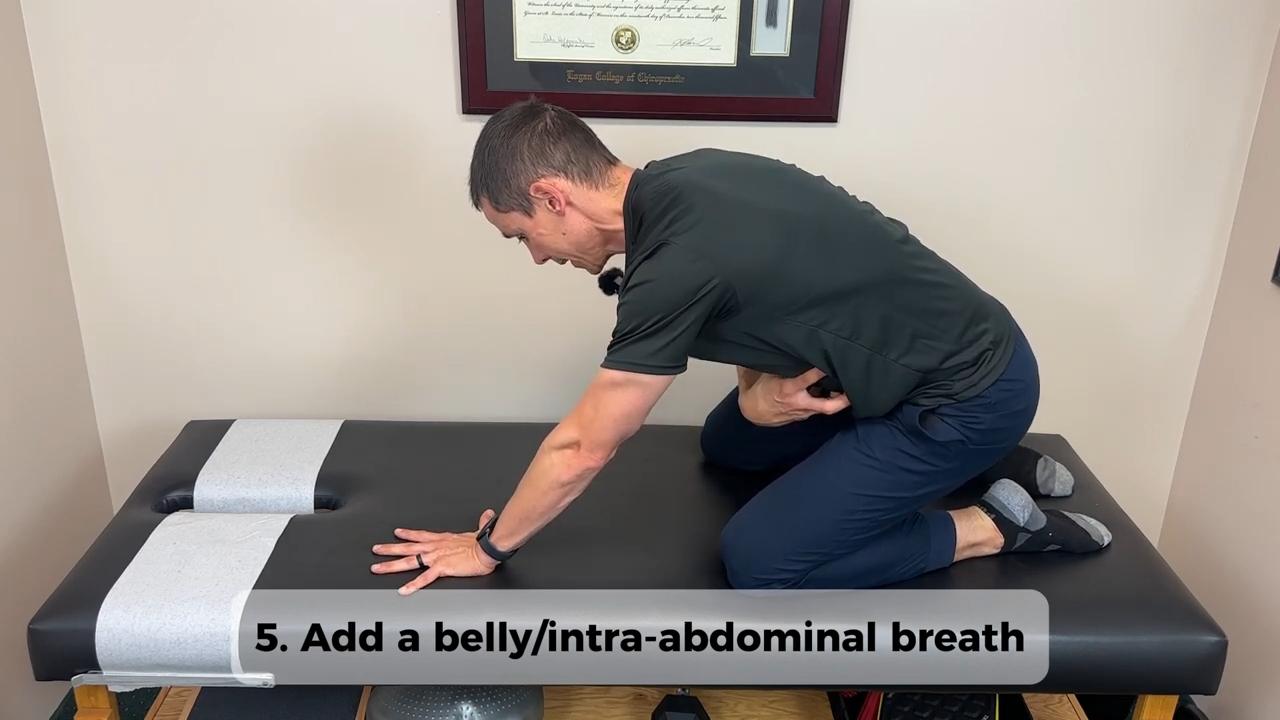
Set up in the quadruped position
Come onto all fours with your hands directly under your shoulders and your knees directly under your hips. Your spine should be in a relaxed, neutral position — not actively arched or rounded. Let gravity do the work of finding neutral rather than muscling into it. A yoga mat or folded blanket under the knees adds comfort for longer sessions.
Create a gentle abdominal pre-tension
Before the first breath cycle, gently expand the lower abdomen outward — not a forceful bracing, just a light expansion that creates mild intra-abdominal pressure. This provides a baseline of stability for the spine while still allowing the breath-driven mobility to occur. Think of it as a 10–15% tension rather than a full brace.
Inhale slowly and deeply into the abdomen
Take a slow, deep breath through the nose — directing the air into the belly so the abdomen expands toward the floor, the lower ribs flare slightly to the sides, and you feel the breath reach into the low back. As the breath fills the abdomen, allow it to naturally drive the lumbar spine upward into gentle flexion (the “cat” position). The key word is allow — do not actively round the back. Let the breath create the movement.
Pause briefly at the top of the inhale
Hold the inhale for 1–2 seconds at the top of the breath. During this pause, you may gently shift the pelvis slightly left or right if you notice one side feels tighter or more restricted — following the breath toward the area of greatest stiffness. This lateral shift can help mobilize asymmetrical restrictions that a purely sagittal (forward-backward) movement misses.
Exhale slowly and allow the spine to settle
Exhale through the mouth or nose slowly — taking 3–4 seconds to complete the exhale. As the air leaves, allow the spine to gently drift back toward neutral or into mild extension. Do not force the extension or try to push the belly toward the floor aggressively. The exhale is a passive release — the back settles as the pressure unloads. Some patients find that a slight “sighing” exhale promotes more complete muscular relaxation.
Repeat for 5–10 slow breath cycles
Perform 5–10 complete inhale-exhale cycles per session, 1–3 times daily. Each cycle should take 6–10 seconds total (3–5 second inhale, 1–2 second pause, 3–4 second exhale). The exercise should feel like a slow, rhythmic wave moving through the spine — not a strenuous stretch. If you are not finding any restriction or tension release after 3–4 breaths, you are likely performing the exercise correctly and the mobility is already present.
During acute flare-ups: Even a very small amount of breath-driven movement is beneficial. If your back is severely guarded, begin with the smallest possible movement — even just the sensation of the breath expanding into the low back without any visible spinal motion. Over several breath cycles, movement will typically increase naturally as the nervous system desensitizes. Never force movement into pain.
Key Technique Points
Watch the Technique
Why This Exercise Works
Frequently Asked Questions
This content is for educational purposes only. Stop if symptoms worsen or new symptoms develop, and consult Dr. Dockery if you are unsure whether this exercise is appropriate for your current presentation. Acute low back pain should always be evaluated by a qualified clinician before beginning a home exercise program.
Restore Your Low Back Mobility in Livonia, MI
The Lumbar Cat Camel with Breath is most effective as part of a complete low back mobility and stabilization program. Dr. Dockery serves patients throughout Livonia, Farmington Hills, Redford, Plymouth, and greater Wayne County.