

Single Leg Stance
with Sliders
A dynamic balance and hip stability exercise prescribed by Dr. Dockery that combines single leg stance with slider-based reaching in multiple planes — simultaneously challenging the standing hip stabilizers, ankle proprioception, and trunk control in a functional, low-impact movement pattern.
What Is Single Leg Stance with Sliders?
Single Leg Stance with Sliders is a balance and lower extremity stability exercise that challenges the body to maintain single-leg stance while the opposite foot slides a slider pad outward in different directions — forward, to the side, and diagonally. Because the sliding foot never bears meaningful weight, virtually all load transfers to the standing leg, demanding high levels of hip abductor strength, gluteus medius activation, ankle proprioception, and trunk lateral stability simultaneously.
The key training stimulus is the standing leg, not the sliding one. The slider foot is simply a tool for shifting the center of mass progressively further from base of support, increasing the demand on the standing hip — particularly the gluteus medius and gluteus minimus — to prevent the pelvis from dropping. This is called a Trendelenburg challenge: the same hip drop pattern seen during walking and running that, when poorly controlled, contributes to hip pain, knee pain, IT band syndrome, and low back pain.
As NIH research on gluteus medius function confirms, the gluteus medius is one of the most clinically important muscles for lower extremity injury prevention — and single-leg loading exercises are among the most effective ways to train it in functional, weight-bearing positions.
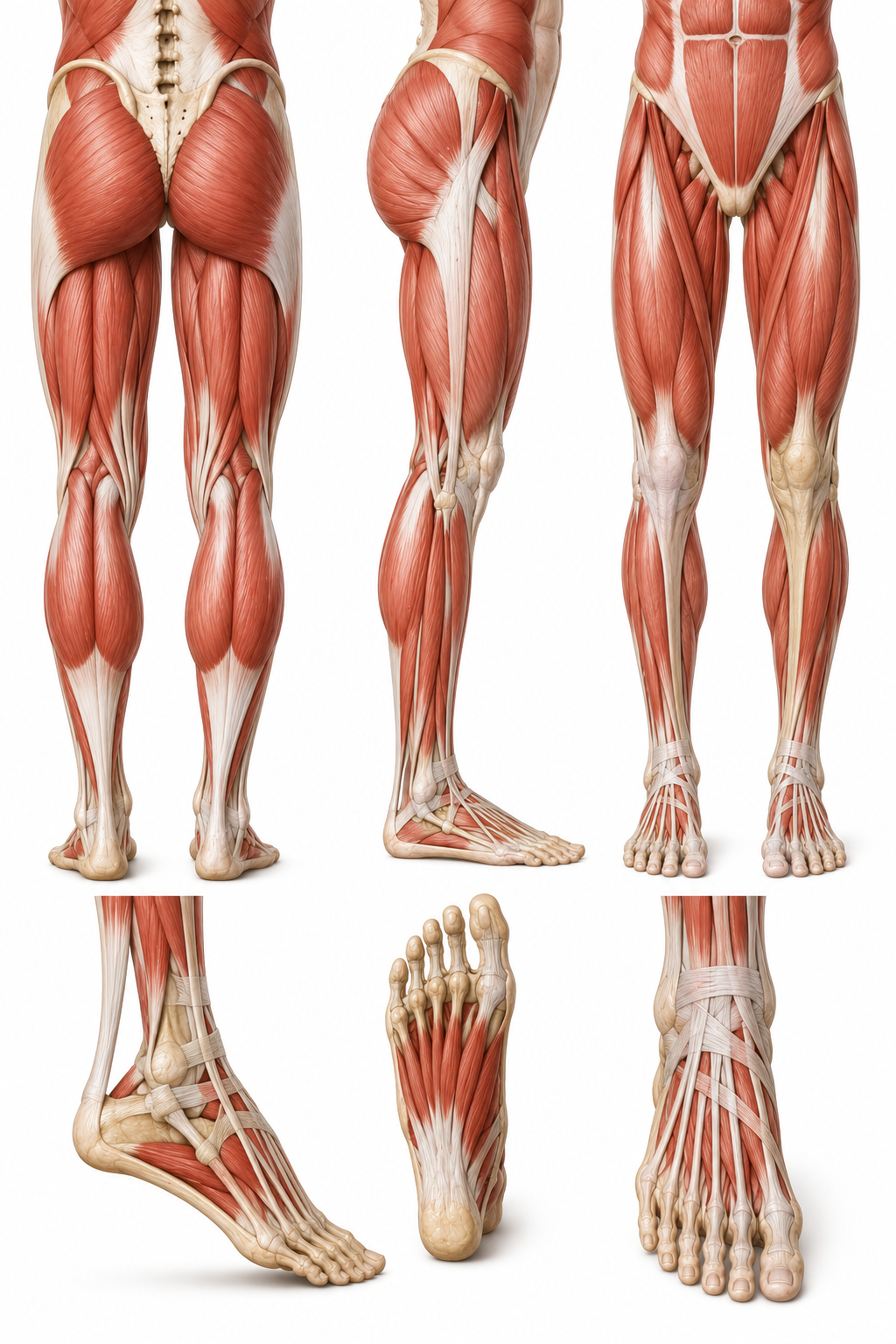
Primary muscles trained (standing leg): Gluteus medius and minimus (lateral hip stabilizers preventing pelvic drop), gluteus maximus (hip extension and rotational control), hip external rotators (piriformis, obturators — controlling femoral alignment), soleus and gastrocnemius (ankle stability), tibialis anterior and posterior (dynamic ankle control), and the intrinsic foot muscles (arch support during sustained single-leg load). The trunk obliques and quadratus lumborum also co-activate to maintain a level pelvis.
Clinical note: This exercise is commonly prescribed as part of hip rehabilitation, knee rehabilitation (particularly patellofemoral pain), ankle sprain recovery, and low back pain programs where weak hip stabilizers are a contributing factor. It bridges the gap between basic hip strengthening exercises like the Banded Clam and Banded Glute Bridge and more demanding functional activities like single-leg squats and running.
Common Conditions This Exercise Addresses
Forward, Lateral & Diagonal Reaches
The slider reach direction determines which aspect of hip and trunk stability is most challenged:
Step-by-Step Instructions
Set up on a smooth surface with one slider pad
Stand on a smooth floor (hardwood, tile, or laminate) with one foot on a slider pad and the other foot firmly planted. Position the slider foot slightly in front of the standing foot to start. Have a wall, chair back, or countertop within arm’s reach for safety if needed — especially on the first few attempts. Feet should be roughly hip-width apart at the starting position.
Shift your weight fully onto the standing foot
Transfer your full body weight onto the standing leg. The slider foot should rest lightly on the pad — it guides the movement but should not bear meaningful weight. Feel the standing hip and glute engage as the load transfers. The standing knee should track directly over the second toe — not caving inward (valgus). Take a moment to establish this loaded position before any slider movement begins.
Maintain a tall, neutral trunk throughout
Stand tall with a slight forward lean at the hip — not at the waist. The hips should hinge very slightly forward so the glute of the standing leg is engaged, not the lower back. Keep the trunk long and avoid excessive side-bending toward the standing leg, which is the most common compensation — it reduces the Trendelenburg demand by shifting center of mass over the base rather than letting the hip stabilizers do the work.
Slowly slide the foot in the prescribed direction
Slide the non-weight-bearing foot slowly in the direction Dr. Dockery has prescribed — forward, to the side, or diagonally. The slider should glide smoothly; do not push down into it. Move only as far as you can while maintaining pelvic level (no hip drop on the slider side), standing knee alignment (no valgus), and a controlled trunk. The standing hip should feel challenged and working throughout the reach.
Hold at end range briefly, then return with control
At the end of the slide, pause for 1–2 seconds in the challenged position. This pause is the highest-demand point of the exercise and the most valuable training moment for the hip stabilizers. Then draw the slider foot back to the starting position with the same controlled speed — do not allow it to snap or drift back passively. The return phase is an important eccentric hip stabilizer training component.
Complete the prescribed reps, then switch sides
Complete the prescribed repetitions on one side before switching the slider to the other foot and repeating. Because hip stability is highly side-specific, both sides should be trained in every session. If one side is significantly weaker, Dr. Dockery may prescribe additional volume on the weaker side — this asymmetry is common and clinically meaningful information for your rehabilitation program.
Stop or regress the exercise if you notice: the hip on the slider side dropping below the standing hip (Trendelenburg sign) during any part of the movement; the standing knee caving inward; the trunk leaning excessively to the standing side; or the foot arching and rolling inward. Any of these indicates the slider range or exercise level exceeds current hip stability — reduce the reach distance or return to a foundational hip exercise first.
How This Exercise Fits the Progression
Key Technique Points
Watch the Technique
Why This Exercise Works
Frequently Asked Questions
Stop the exercise if pain increases or new joint symptoms develop, and consult Dr. Dockery before modifying the program. This exercise should complement, not replace, individualized clinical assessment and care.
Hip Stability & Balance Rehabilitation in Livonia, MI
Single Leg Stance with Sliders is most effective as part of a progressive lower extremity program. Dr. Dockery serves patients throughout Livonia, Farmington Hills, Redford, Plymouth, and greater Wayne County.