
TWL Exercise
for Lower Trap Activation & Shoulder Blade Stability
A shoulder stabilization exercise prescribed by Dr. Dockery to activate the mid and lower trapezius — the muscles most responsible for controlling the shoulder blade during arm movement, reducing neck tension, and correcting the rounded-shoulder posture patterns common in desk workers and athletes alike.
What Is the TWL Exercise?
The TWL Exercise is a shoulder stabilization and postural endurance drill that moves the arms through three progressively loaded positions — a T (arms out to the sides), a W (elbows tucked down toward the hips), and an L (elbow bent to 90 degrees with forearm vertical) — while maintaining active shoulder blade retraction and depression throughout. The name simply describes the arm shapes made during the three positions.
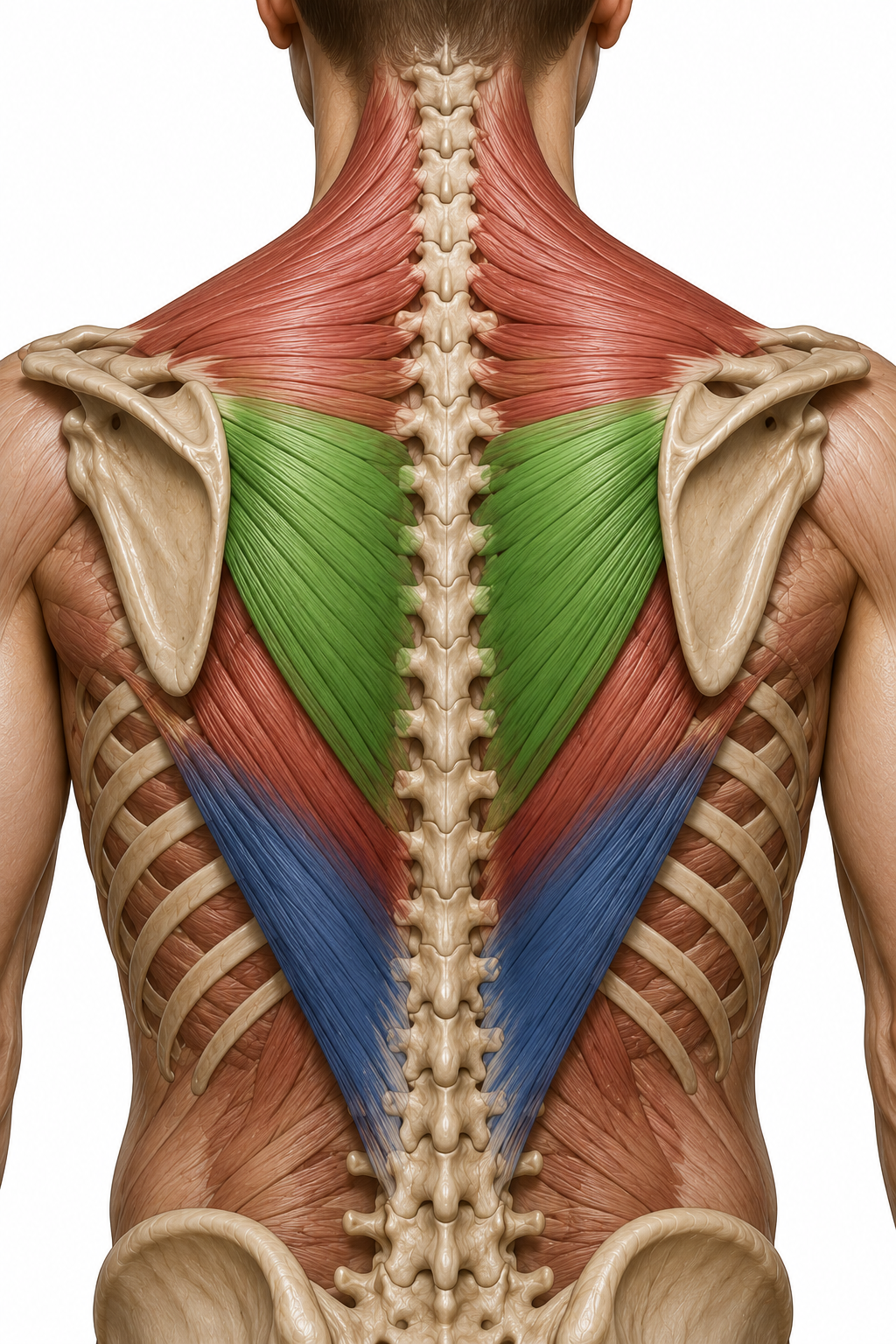
The primary training target is the mid and lower trapezius — two portions of the trapezius muscle that are chronically underused in most people and chronically overloaded in the upper trapezius and levator scapulae as a result. When the mid and lower trap fail to stabilize the shoulder blade, the upper trap and neck muscles compensate, driving the tension headaches, neck tightness, and shoulder impingement patterns that frequently bring patients to Dr. Dockery’s office.
According to Physiopedia’s review of scapular dyskinesis, poor scapular stabilizer activation — particularly of the lower trapezius — is one of the most consistently identified contributors to shoulder pain, neck dysfunction, and impingement syndrome. The TWL exercise directly addresses this pattern by loading the lower trap in each of its three primary functions: retraction (T), depression + retraction (W), and upward rotation (L).
Primary muscles trained: Lower trapezius (scapular depression and upward rotation), mid trapezius (scapular retraction), and serratus anterior (scapular protraction control). Secondary stabilizers include the rhomboids and rotator cuff, which co-activate to maintain shoulder stability during each position.
Clinical note: The TWL is frequently paired with the Scapular Push-Up, which trains serratus anterior, and the 3 Month Supine with Overhead Extension, which trains lower trap in a supine position before loading it standing. Together these three exercises address the full scapular stabilizer chain — serratus anterior, mid trap, and lower trap — from the easiest to the most demanding position.
Common Conditions This Exercise Addresses
Understanding T, W, and L
Each position targets the trapezius at a slightly different angle and through a different function. Moving through all three in sequence provides comprehensive lower and mid trap training.
Arms out to the sides
Arms extended horizontally at shoulder height, thumbs pointing toward the ceiling. Emphasizes mid trapezius retraction and horizontal abduction of the shoulder blade. Hold and feel the muscles between the shoulder blades engage.
Elbows tucked to “pockets”
From T, bend the elbows and draw them down toward the back pockets, forming a W shape. Emphasizes lower trapezius depression and retraction together — this is typically the weakest position for most patients and the one with the greatest rehabilitation value.
Forearms vertical, elbows at 90°
Elbows bent to 90 degrees with forearms pointing upward, forming an L. Emphasizes lower trap in upward rotation of the shoulder blade — the position critical for pain-free overhead reach and throwing mechanics.
Step-by-Step Instructions
Set up your posture before moving
Stand tall with a neutral spine. Stack the head over the ribcage, not forward. Keep the chin gently tucked — not forced in, just neutral. Avoid locking the knees. You can also perform this exercise lying face-down (prone) on a table or the floor to remove gravity compensation patterns.
Set the shoulder blades before each rep
Before moving the arms into any position, consciously retract and slightly depress the shoulder blades — think of sliding them down and toward the spine. This “pre-sets” the lower and mid trap and prevents the upper trap from substituting during the exercise. Maintain this setting throughout.
Move into the T position
Raise both arms out to the sides at shoulder height with thumbs pointing toward the ceiling. Focus on feeling the muscles between and below the shoulder blades working — not the tops of the shoulders. Hold 1–2 seconds, then perform small isometric contractions to increase muscle activation.
Transition to the W position
Bend the elbows and draw them downward toward the back pockets, keeping the shoulder blades retracted and depressed. The hands should be roughly level with the lower ribcage. Think about driving the elbows toward the floor and back, not just bending them. This is where most patients feel the lower trap activate for the first time.
Transition to the L position
Keep the elbows at your sides and rotate the forearms up so they point toward the ceiling, forming an L shape. Maintain shoulder blade stability — do not let the shoulders roll forward or the elbows flare outward. Hold briefly and feel the continued lower trap engagement during this upward rotation demand.
Perform controlled repetitions
Complete 10–15 controlled repetitions through all three positions while maintaining shoulder blade set and postural stability throughout. Quality of muscle activation matters more than speed or range — stop and reset if the shoulders begin shrugging, the neck tenses, or the low back arches excessively.
Most common compensation: Shrugging the shoulders toward the ears during the T or L position. This substitutes the upper trap for the lower trap and reinforces the exact dysfunction the exercise is meant to correct. If you feel tightness in the tops of your shoulders or neck during the exercise, reduce your range of motion, re-set the shoulder blades, and focus on pulling them down before lifting the arms.
Key Technique Points
Watch the Technique
Why This Exercise Works
Frequently Asked Questions
This content is for educational purposes only. Stop if symptoms worsen or pain develops, and consult Dr. Dockery if you are unsure whether this exercise is appropriate for your condition.
Fix the Root Cause of Your Shoulder & Neck Symptoms in Livonia, MI
The TWL exercise is most effective as part of a comprehensive scapular stabilization program. Dr. Dockery serves patients throughout Livonia, Farmington Hills, Redford, Plymouth, and greater Wayne County.