
Life in Motion Chiropractic · Livonia, MI
A herniated disc doesn’t always
mean surgery.
Most herniated discs respond very well to conservative care — but only when the right techniques are applied to the right disc problem. Dr. Dockery uses specific, evidence-based approaches to identify your disc injury precisely and treat it without medication or surgery.
What is a herniated disc — and what does it actually mean for you?
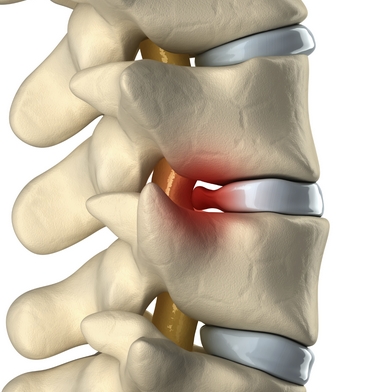
Between each vertebra in your spine sits a disc — a tough outer ring (annulus fibrosus) surrounding a gel-like center (nucleus pulposus). These discs act as shock absorbers, allowing movement and protecting the vertebrae from impact.
A herniated disc occurs when the outer ring cracks or tears and the inner material pushes outward — sometimes pressing against nearby nerve roots or the spinal cord itself. Depending on the location and direction of the herniation, symptoms can range from localized back pain to intense radiating pain, numbness, or weakness down an arm or leg.
What’s important to understand: a disc herniation on an MRI is not a life sentence. Research consistently shows that disc herniations often reduce in size naturally over time — and that conservative chiropractic care is one of the most effective first-line treatments available, often producing outcomes comparable to surgery with far less risk and recovery time.
Types of Disc Injury

Herniated disc symptoms vary by location — and by how the nerve is affected
A disc herniation in the lower back produces different symptoms than one in the neck. The location, size, and direction of the herniation all determine what you feel — and how we treat it.
Radiating Leg Pain (Sciatica)
Sharp, electric, or burning pain that travels from the lower back through the buttock and down the leg. Often the result of L4–L5 or L5–S1 disc herniation pressing on the sciatic nerve.
Radiating Arm Pain
Shooting pain, tingling, or numbness down the arm into the fingers. Typically caused by a cervical disc herniation at C5–C6 or C6–C7 compressing a nerve root in the neck.
Lower Back Pain
Localized aching, stiffness, or sharp pain in the lumbar spine — often worse with sitting, bending, or prolonged standing. May occur with or without leg symptoms.
Numbness & Tingling
Pins-and-needles sensation in the legs, feet, arms, or hands — indicating nerve root irritation or compression. Location of numbness helps identify which disc level is involved.
Muscle Weakness
Difficulty with foot drop, grip strength, or specific muscle actions — a sign of more significant nerve compromise that requires prompt evaluation and specific care.
Pain With Movement
Certain positions or movements dramatically worsen or relieve symptoms. This directional sensitivity is clinically important — it guides the specific treatment approach used.
“The direction your pain centralizes or spreads with movement tells us exactly how to treat your disc — and that information changes everything about the care plan.”
Why conservative chiropractic care works — and what the research shows
Surgery for herniated discs is often unnecessary. Multiple high-quality studies show that the majority of patients with lumbar disc herniation — even those with significant nerve compression — improve substantially with conservative care over 6–12 weeks.
A landmark study published in Spine found that chiropractic spinal manipulation was as effective as surgery for disc herniation with radiculopathy in carefully selected patients — with comparable long-term outcomes and significantly less risk.
The key is specificity. Not all disc herniations respond to the same approach. Dr. Dockery’s use of end range loading assessment (a system of directional movement testing) identifies exactly which positions and directions centralize your pain — allowing treatment to be precisely matched to your specific disc problem rather than applied generically.
Specific techniques matched to your disc — not a generic protocol
Dr. Dockery uses a combination of assessment and treatment tools chosen based on your specific disc level, herniation type, and symptom behavior — not a one-size-fits-all adjustment.
End Range Loading Assessment
A systematic movement evaluation that identifies which directions centralize or reduce your symptoms — providing a specific directional treatment and home exercise approach unique to your disc problem. The most evidence-based assessment tool available for disc injuries.
COX Flexion-Distraction
A gentle, low-force technique performed on a specialized table that creates a negative pressure inside the disc — decompressing the nerve, reducing the herniation, and restoring disc hydration. Particularly effective for lumbar herniations with leg pain. No high-velocity thrusting required.
DNS-Based Stabilization Rehab
Once pain is managed, retraining deep spinal stabilizers using Dynamic Neuromuscular Stabilization principles prevents recurrence — addressing the underlying motor control breakdown that allowed the disc to herniate in the first place.
Targeted Spinal Adjustment
When appropriate, specific chiropractic adjustments at adjacent segments restore mobility and reduce the mechanical load on the compromised disc. Technique selection — Gonstead, Thompson, or instrument-assisted — is determined by your exam findings and comfort.
Class 4 Laser Therapy
Deep tissue photobiomodulation reduces inflammation around the affected nerve root, accelerates disc tissue healing, and provides pain relief that supports faster recovery and greater comfort during rehabilitation.
Home Exercise Program
Directional exercises based on your end range loading findings — prescribed specifically for your disc level and symptom pattern. Accessed via our Rehab Library for guided video instruction between visits.
What happens when you come in with disc pain
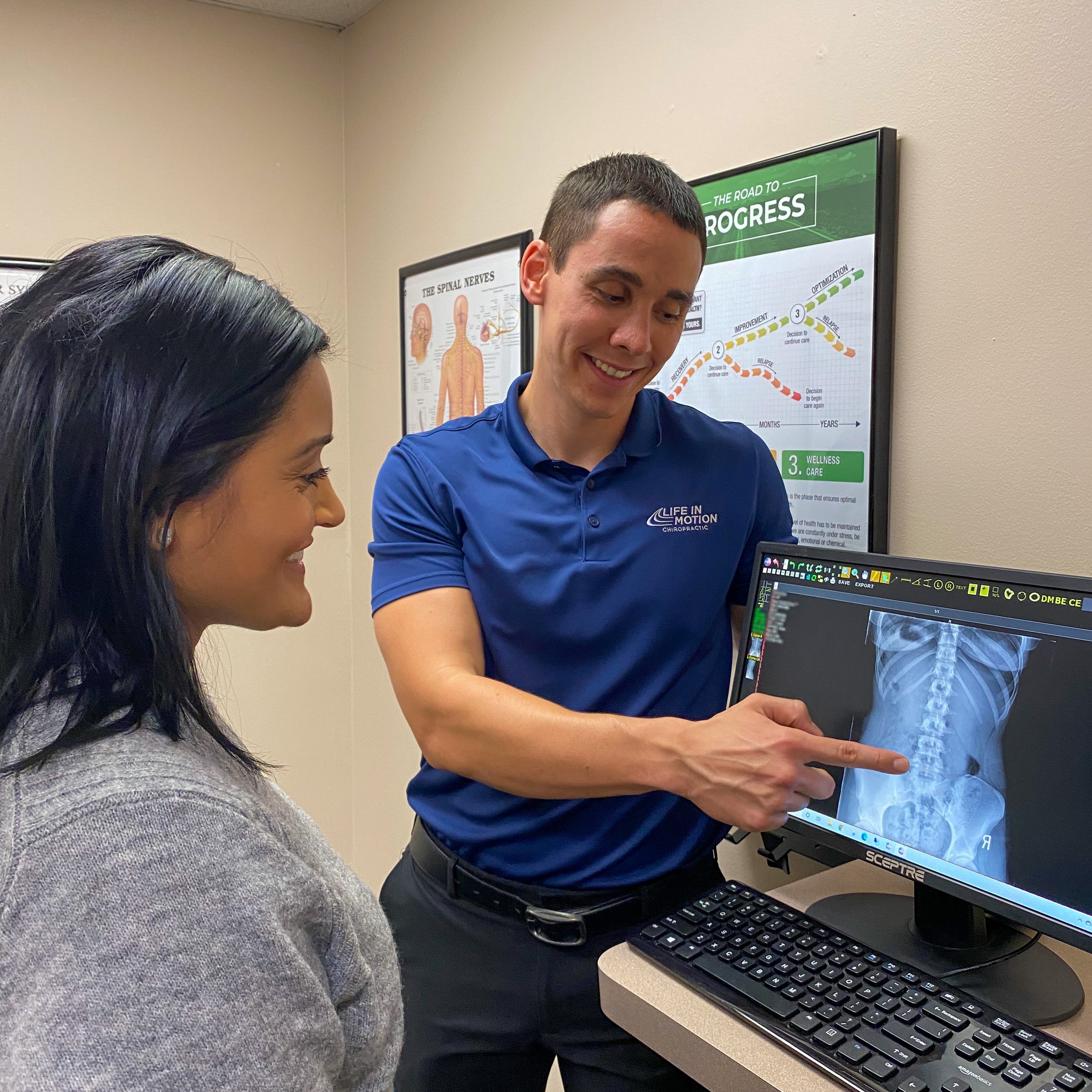
Your first appointment is a comprehensive evaluation — not a generic adjustment. We need to understand your disc problem precisely before we treat it.
History & Consultation
Onset, location, behavior of symptoms, what worsens and relieves pain, prior imaging, and your goals.
Neurological & Movement Exam
Reflex testing, dermatomal sensation, muscle strength, and end range loading to identify the disc level and directional preference.
Digital X-Rays (if indicated)
In-office imaging to assess disc space narrowing, alignment, and rule out other structural findings before treatment begins.
Report & First Treatment
Dr. Dockery explains exactly what he found and begins treatment same visit — including COX, laser, or directional exercise as appropriate.
When to seek care immediately vs. when conservative treatment is appropriate
⚠ Seek emergency care immediately if you have:
- Loss of bowel or bladder control (Cauda Equina Syndrome — a surgical emergency)
- Progressive weakness in both legs
- Numbness in the inner thighs and groin (“saddle anesthesia”)
- Severe progressive neurological deficit not responding to any position
✓ Conservative care is appropriate when:
- Pain radiates into one leg or arm (even severely)
- Symptoms have a directional pattern — better or worse in certain positions
- You’ve had the symptoms for less than 12 weeks
- Neurological findings are present but stable (not rapidly worsening)
- You’ve been told surgery is “optional” or want to exhaust conservative options first
What patients say about their care at Life in Motion
I came in with intense back pain and was told by another provider I might need surgery. Dr. Dockery did a thorough exam, explained exactly what was going on, and started treatment the same day. He treats the root of the issue and empowers you with the tools to heal. Months later I’m back to everything I love doing.
Dr. Dockery is very thorough, patient, and enjoyable to work with. My treatment plan is tailored to my specific needs with clear, measurable goals so I can actually see my progress. I always leave with useful information.
I’m a truck driver and spend most of my day sitting. Since starting here, I haven’t had back pain. Great people, great hours. If you’re looking for a chiropractor in Livonia, look no further.
Common questions about herniated disc treatment
Can a chiropractor actually fix a herniated disc?
“Fix” is a complicated word — but chiropractic care is one of the most effective conservative treatments for herniated disc pain and the nerve compression it causes. COX flexion-distraction in particular has strong clinical evidence for lumbar disc herniations with sciatica. The goal is to reduce nerve irritation, restore function, and allow the disc to heal — which research shows happens naturally in the majority of cases. See our chiropractic care page for more on the specific techniques used.
How is this different from a regular chiropractic adjustment?
Standard high-velocity adjustments are often not appropriate for acute disc herniations — and applying them without a proper disc assessment can aggravate symptoms. Dr. Dockery uses end range loading to identify your directional preference first, then selects the specific technique (COX, instrument-assisted, or directional mobilization) that matches your disc problem. The approach is evidence-based and individualized, not generic.
I’ve already had an MRI showing a herniation — do I need more imaging?
Bring your MRI if you have it — it’s extremely helpful context. Dr. Dockery may or may not take additional X-rays depending on what the MRI shows and what your physical exam reveals. An MRI shows structure; the clinical exam shows how that structure is affecting your function and symptoms, which is what actually guides treatment.
What’s the difference between a bulging disc and a herniated disc?
A bulging disc is when the outer ring is intact but the disc extends unevenly beyond its normal boundary — like a tire that’s slightly flat on one side. A herniated disc involves a tear in the outer ring with the inner material pushing through. Both can cause nerve symptoms; both respond well to conservative care. The distinction matters more for surgical planning than for chiropractic treatment decisions.
I have sciatica — is that related to my disc?
Often yes — lumbar disc herniation at L4–L5 or L5–S1 is one of the most common causes of sciatica. But sciatica can also come from piriformis syndrome, sacroiliac joint dysfunction, or spinal stenosis. A proper clinical exam distinguishes between these — which matters because each has a different treatment approach. See our sciatica page for more.
How long until I feel better?
Most patients with acute disc herniations notice meaningful improvement within 2–4 weeks of specific conservative care. The research benchmark for substantial improvement is typically 6–12 weeks. Chronic herniations that have been present for months or years may take longer. Dr. Dockery will give you a realistic, specific timeline at your first visit — not an open-ended plan.
Further reading from trusted clinical sources
These outbound links go to reputable, peer-reviewed or institutional sources — not promotional content. We include them because an informed patient makes better decisions about their care.
Don’t wait for a disc problem to become a surgical one.
The sooner a herniated disc is properly assessed and treated, the better the outcome. Same-day appointments available — book online or call us now.
27620 Five Mile Rd, Livonia, MI 48154 · Mon–Thu & Saturday by Appointment