
Life in Motion Chiropractic · Livonia, MI
Most sports injuries come back
because the cause was never fixed.
Rest gets you out of pain. It does not fix the joint restriction, muscular imbalance, or movement fault that produced the injury. Dr. Dockery’s biomechanical assessment identifies what actually went wrong — so you can return to full performance, not just return to practice.
Rest alone does not fix a sports injury — it just postpones it
The standard approach to sports injury — RICE (rest, ice, compression, elevation), wait for pain to subside, return to play — works for short-term symptom management. It does almost nothing for long-term injury prevention. The reason is straightforward: pain is a symptom. The underlying biomechanical problem that generated the injury is structural, and it doesn’t resolve on its own with rest.
Every injury leaves behind residual effects: joint restriction from the acute inflammatory response, muscular inhibition around the injury site as a protective reflex, compensatory movement patterns adopted to avoid pain, and altered neuromuscular control from the disruption to the proprioceptive system in the injured tissue. When these aren’t specifically addressed before returning to sport, re-injury is not just possible — it’s predictable.
Dr. Dockery’s sports injury evaluation goes beyond identifying where it hurts. It identifies why it happened — which joints are restricted, which muscles are inhibited, which movement patterns broke down — and addresses all of it before clearing you for return to play. Learn what your first visit includes →
The DNS difference: Dr. Dockery’s training in Dynamic Neuromuscular Stabilization (DNS) provides a framework for assessing and restoring proper movement patterns at the most fundamental level — identifying how the deep stabilizers of the spine and extremities are functioning under load, and retraining them with sport-specific progressions. This is what separates re-injury prevention from simple pain management.
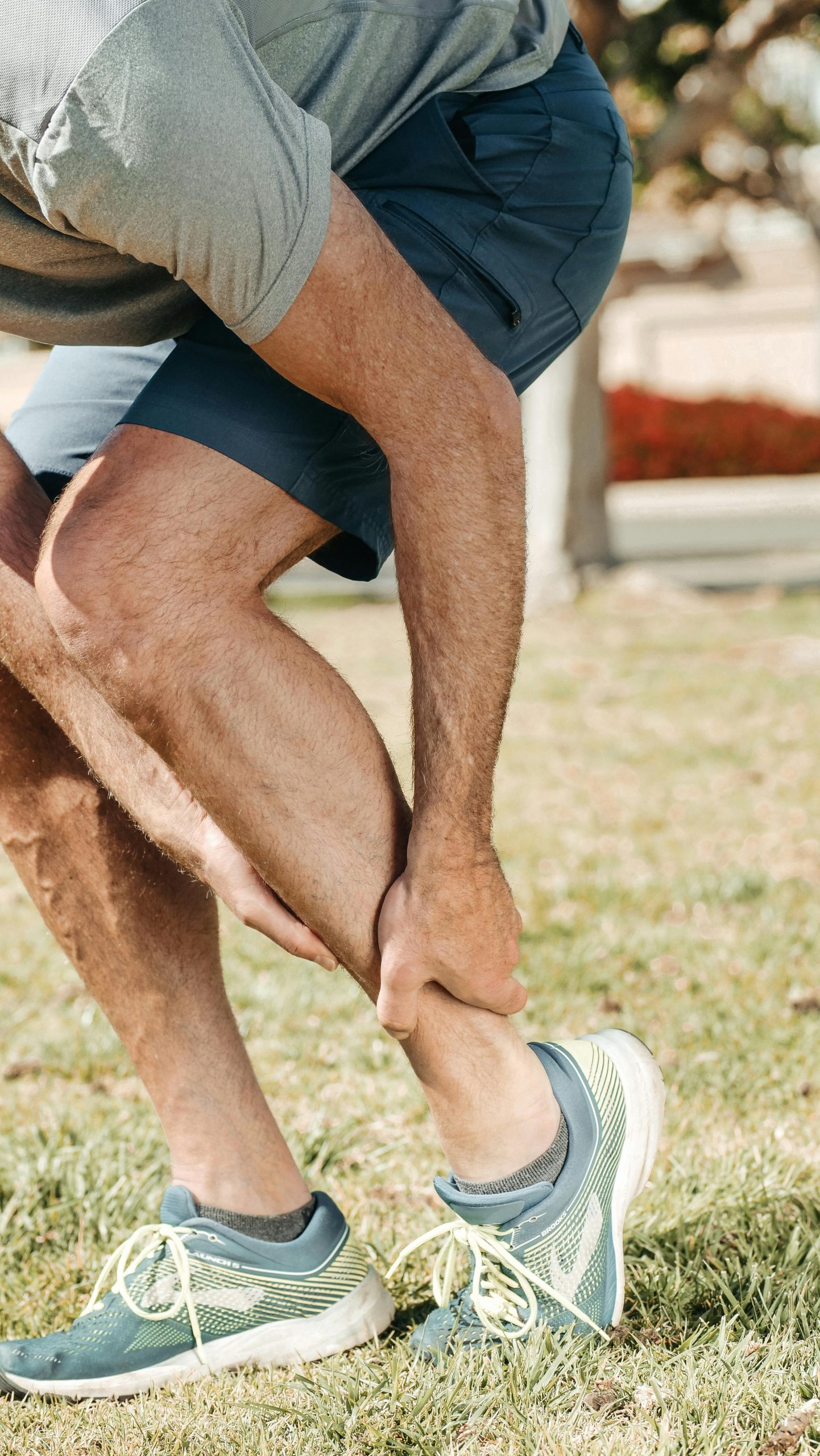
Ankle sprains are among the most re-injured structures in sport — with recurrence rates as high as 70% when the underlying joint instability and proprioceptive deficit are not specifically rehabilitated.
Sudden-onset injuries from a single event
Acute sports injuries occur from a specific identifiable mechanism — a fall, collision, sudden change of direction, or direct impact. Prompt evaluation is important: early conservative care reduces inflammation more effectively, prevents problematic scar tissue formation, and significantly shortens the overall recovery timeline.
- Ankle sprains — inversion or eversion
- Muscle strains — hamstring, quadriceps, groin
- Joint sprains — knee, shoulder, wrist
- Acromioclavicular (AC) joint separations
- Cervical spine injuries from contact sports
- Rib injuries from impact or twisting
- Acute low back injuries from lifting or impact
Gradual-onset injuries from repetitive loading
Overuse injuries develop over weeks or months of repetitive mechanical stress — particularly when training load increases faster than the tissue can adapt, or when a biomechanical fault places asymmetric demand on a specific structure. These are the most commonly underdiagnosed sports injuries because there is no single identifiable event.
- Patellar tendinopathy (jumper’s knee)
- IT band syndrome (runner’s knee)
- Shin splints and tibial stress reactions
- Rotator cuff tendinopathy in throwing athletes
- Plantar fasciitis and Achilles tendinopathy
- Tennis elbow and golfer’s elbow
- Hip flexor tendinopathy and FAI in runners and cyclists
Sports injuries treated at Life in Motion
These are the most frequent sports injury presentations in our practice. Many patients have more than one simultaneously — injury in one area almost always creates compensatory stress in adjacent structures.
Knee Pain — Patellar & IT Band
Patellar tendinopathy (jumper’s knee) and IT band syndrome (runner’s knee) are both driven by biomechanical loading faults — usually a combination of hip abductor weakness, poor knee tracking, and excessive training volume. Treating the knee without addressing the hip and foot mechanics produces reliable relapse. Related: hip pain →
Ankle Sprains & Chronic Instability
The most re-injured structure in sport. Lateral ankle sprains damage the proprioceptive mechanoreceptors in the anterior talofibular ligament — leaving residual instability that creates a 2–8× elevated re-injury risk when neuromuscular control is not specifically rehabilitated. Rest and taping address the acute pain; the instability requires active intervention.
Hamstring & Hip Flexor Strains
Among the most common injuries in running, kicking, and court sports. Hamstring strains in particular have very high recurrence rates — up to 34% in the first season — driven by incomplete rehabilitation of the musculotendinous junction and failure to restore normal eccentric strength under load before return to play.
Rotator Cuff & Shoulder Injuries
Overhead athletes — swimmers, throwers, volleyball and tennis players — are particularly prone to rotator cuff tendinopathy and impingement from repetitive loading in compromised positions. The cervical spine and thoracic mobility are assessed alongside the shoulder because they directly influence throwing mechanics and subacromial space. Related: shoulder pain →
Shin Splints & Tibial Stress Reactions
Medial tibial stress syndrome (shin splints) through to frank tibial stress fractures form a continuum of bone stress injury driven by rapid training load increases and biomechanical risk factors including foot pronation, hip weakness, and reduced ankle dorsiflexion. Early identification and load management prevents progression to stress fracture.
Low Back & SI Joint Pain in Athletes
Lumbar spine and sacroiliac joint injuries are extremely common in weightlifters, rowers, cyclists, and contact sport athletes. Repetitive spinal loading in flexion or rotation can produce disc injury, facet irritation, and SI joint dysfunction — all of which respond well to chiropractic care and sport-specific rehabilitation. Related: back pain →
Tennis Elbow & Golfer’s Elbow
Lateral (tennis elbow) and medial (golfer’s elbow) epicondylopathy are overuse tendinopathies of the common extensor and flexor origins at the elbow. Despite the names, both are common in any sport or activity involving repetitive grip — including racquet sports, golf, climbing, and manual labor. Laser therapy and eccentric loading protocols produce excellent outcomes.
Plantar Fasciitis & Achilles Tendinopathy
The two most common foot and ankle overuse injuries in runners and field sport athletes. Both are driven by repetitive tensile loading and respond well to a combination of soft tissue release, Class 4 laser therapy to reduce tendon inflammation, load management, and progressive calf and foot strengthening protocols.
Post-Concussion Cervical Dysfunction
Many post-concussion symptoms — persistent headache, neck stiffness, balance disturbance, visual tracking difficulty — have a significant cervical spine component. Cervical joint restriction from the same impact that caused the concussion is frequently unaddressed, prolonging recovery. Chiropractic cervical care is an evidence-supported component of concussion rehabilitation when appropriately staged. Related: headaches →
When a sports injury requires imaging or specialist referral first
Suspected fractures, complete tendon or ligament ruptures (including ACL, Achilles), acute dislocations, and injuries with significant neurological symptoms require imaging and orthopedic consultation before conservative care begins. If your presentation suggests any of these, Dr. Dockery will coordinate the appropriate referral promptly. When there is clinical doubt, getting an accurate structural diagnosis is always the right first step. The Ottawa Ankle and Knee Rules guide evidence-based decisions about when imaging is warranted for acute joint injuries.
“The goal is not just to get you out of pain — it’s to get you back to full performance with less risk of re-injury than before you came in. That requires finding and correcting the movement fault, not just treating where it hurts.”
Our approach to sports injury care
Every sports injury care plan at Life in Motion is built around three goals: resolve the acute injury efficiently, identify and correct the biomechanical fault that caused it, and return you to sport at full capacity — not just pain-free.

Joint Manipulation & Mobilization
Acute and overuse sports injuries almost always produce residual joint restriction — in the injured structure itself and in adjacent joints compensating for it. Specific chiropractic manipulation restores full joint mobility, reduces nerve irritation, normalizes muscle tone around the joint, and is one of the fastest evidence-based methods for resolving the mechanical component of a sports injury. Dr. Dockery applies this to the spine and extremities equally, treating the injury in its full kinetic chain context.
Learn about our chiropractic techniques →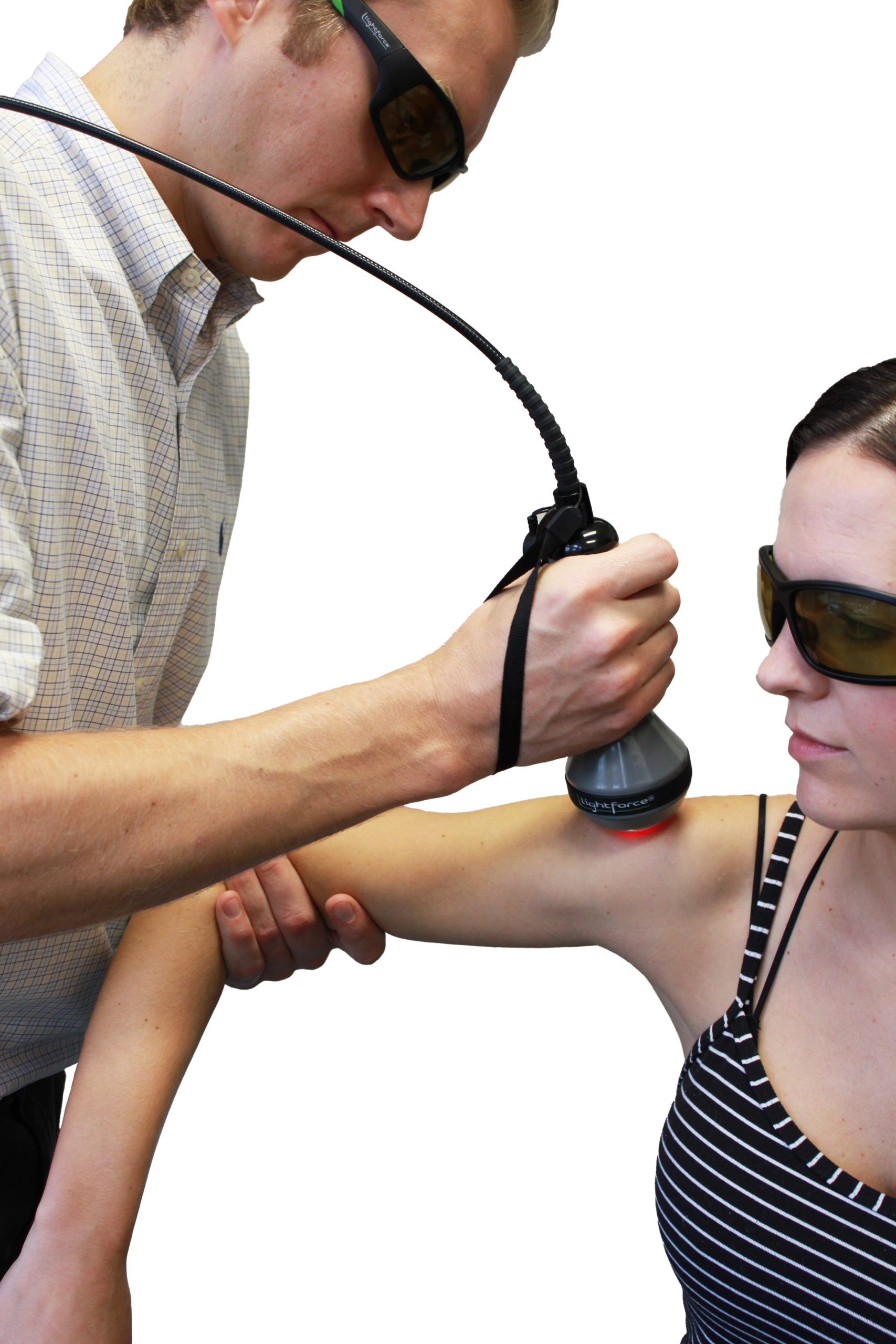
Class 4 Laser Therapy — Accelerated Tissue Repair
Our LightForce 15W Class IV laser is one of the most clinically effective tools available for sports injuries because it works at both the acute and chronic stages. In acute injuries, it rapidly reduces inflammation and edema, controls pain without medication, and stimulates the cellular repair processes that determine tissue quality. In chronic overuse conditions — tendinopathy, fasciopathy, stress reactions — it promotes tendon remodeling, reduces fibrosis, and enables earlier loading in rehabilitation. Many athletes notice meaningful improvement in pain and mobility within just a few sessions.
Learn about Class 4 Laser Therapy →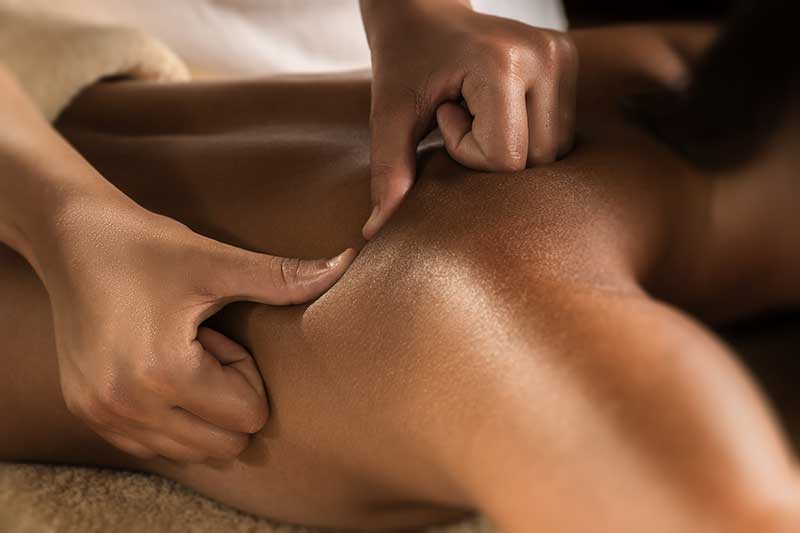
Soft Tissue Therapy & Myofascial Release
Sports injuries create a predictable pattern of soft tissue dysfunction: the acutely injured tissue becomes fibrotic and adhered during healing, while surrounding muscles develop protective guarding that becomes chronic if not addressed. Targeted myofascial release and soft tissue therapy break up adhesions in healing tissue, restore normal muscle extensibility, and reduce the compensatory tension patterns that would otherwise create secondary injuries. Particularly important for hamstring strains, rotator cuff presentations, IT band syndrome, and Achilles tendinopathy.
Learn about massage therapy →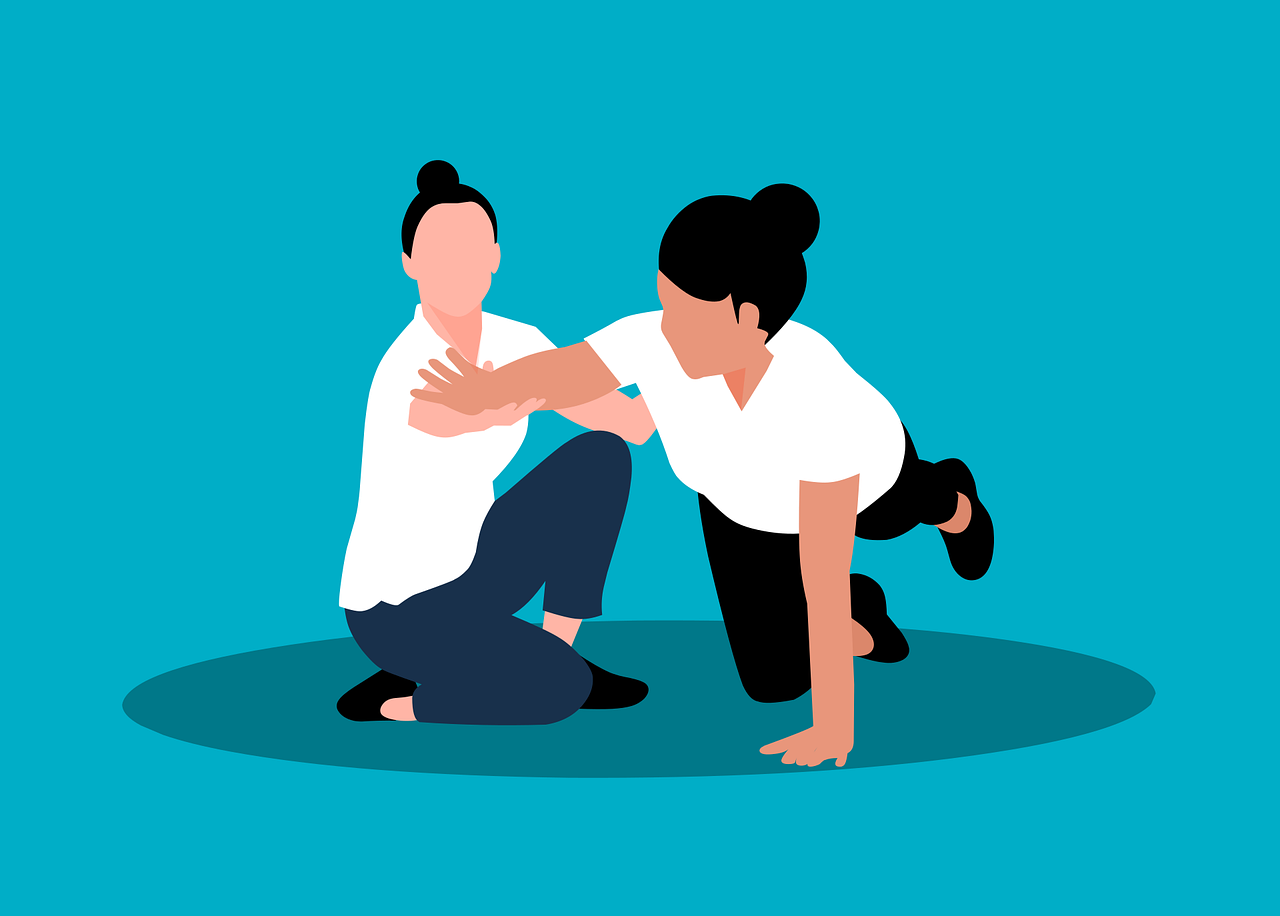
Sport-Specific Rehabilitation & Return-to-Play
The final — and most important — phase of sports injury care. Rehabilitation at Life in Motion is not a generic set of resistance band exercises. It is a progressively loaded, sport-specific program designed to restore the exact neuromuscular demands your sport places on the injured tissue. Dr. Dockery’s DNS-informed approach ensures that deep stabilizer function is restored before superficial strength is built on top of it — which is the sequence that prevents re-injury. All exercises are available to review between visits through our Rehab Exercise Library, and return-to-play criteria are established clearly so you know exactly when you’re ready.
How we determine when you’re actually ready to return
The most common mistake in sports injury management is using pain as the only return-to-play criterion. Pain-free does not mean tissue-ready, neuromuscularly-ready, or biomechanically-ready. At Life in Motion, return-to-sport decisions follow a structured progression with objective criteria at each stage — not guesswork.
Pain & Inflammation Control
Acute pain, swelling, and restricted range of motion are addressed through manipulation, laser therapy, and soft tissue work. Return to modified training may begin here — maintaining conditioning while protecting the healing tissue. Full return to sport does not begin at this stage.
Restore Full Range of Motion & Joint Mechanics
The injured joint must demonstrate full, pain-free range of motion before loading begins. Any residual restriction is cleared with manipulation and mobilization. Adjacent structures are assessed for compensatory restrictions that developed during the acute phase.
Restore Neuromuscular Control & Deep Stabilizer Function
The proprioceptive and neuromuscular deficits from the injury are addressed through DNS-informed stabilization exercises. The deep stabilizers of the spine and extremities are tested and progressively loaded. This is the stage most often skipped — and the primary reason for re-injury.
Sport-Specific Strength & Load Tolerance
Rehabilitation progresses to sport-specific movement patterns, eccentric loading of the injured tissue, and gradually increasing training volumes. Functional strength symmetry (comparison to the uninjured side) provides an objective benchmark that removes subjectivity from return-to-play decisions.
Full Return to Sport — With Better Mechanics Than Before
The final clearance is based on objective functional criteria, not pain alone. Patients who complete the full progression typically return with improved movement quality, better load distribution, and measurably reduced re-injury risk compared to their pre-injury state. The goal is not just to get you back — it’s to get you back better.
Athletes and active adults at every level of competition
You don’t need to be a competitive athlete to benefit from sports injury care. If physical activity is important to your quality of life, getting back to it fully matters.
High school and collegiate athletes in football, soccer, basketball, baseball, volleyball, swimming, and track
Recreational runners dealing with knee pain, shin splints, plantar fasciitis, or IT band syndrome
Gym athletes and weightlifters with back, shoulder, or hip pain from training loads or technique breakdown
Weekend warriors who play recreational leagues (golf, tennis, softball, pickleball) and experience recurring overuse pain
Athletes recovering from previous injuries who keep re-injuring the same structure despite rest
Anyone who was told their injury just needs “time and rest” — when the underlying biomechanical cause hasn’t been identified
Does chiropractic care improve sports injury outcomes?
Yes — and elite sport has recognized this for decades. The International Olympic Committee includes chiropractic care in its consensus statements on athlete health, and chiropractors are integral members of the medical teams at every Olympic Games. All 32 NFL teams employ chiropractors. The evidence for specific interventions is robust across both acute and overuse sports injury presentations.
Chiropractic for Acute Soft Tissue Injuries
A systematic review in the Journal of Manipulative and Physiological Therapeutics found that spinal manipulation and manual therapy produce clinically significant improvements in pain and function for acute musculoskeletal injuries — with effect sizes comparable to or exceeding NSAIDs and physical therapy alone at short-term follow-up, and without the adverse effects associated with long-term NSAID use in athletes.
Brantingham JW, et al. “Manipulative therapy for lower extremity conditions.” J Manipulative Physiol Ther. 2012;35(2):127–166. PubMedLaser Therapy for Tendinopathy
A 2014 Cochrane systematic review found that low-level laser therapy (LLLT) produces statistically significant reductions in pain and functional improvement for tendinopathy presentations — including Achilles, patellar, and rotator cuff tendinopathy — supporting its use as a primary conservative intervention in sports injury rehabilitation.
Tumilty S, et al. “Low level laser treatment of tendinopathy.” Photomed Laser Surg. 2010;28(1):3–16. PubMedWhat patients say about care at Life in Motion
Dr. Dockery is outstanding. I always leave with useful information and exercises to continue my progress. He takes the time to teach, truly cares about his patients, and never stops learning. I couldn’t sit properly all week — after one visit, I could again. Worth every bit of the trip.
I came in with intense SI joint pain and from the first visit Dr. Dockery was incredibly thorough. He explained what was going on, adjusted me carefully, and gave me the right exercises. I noticed real improvement quickly — he treats the root of the issue.
I’m a truck driver and spend most of my day sitting. Since starting here, I haven’t had back pain. Great people, great hours, very reasonably priced. If you’re looking for a chiropractor, look no further.
You don’t have to live with pain. Dr. Dockery is knowledgeable, professional, and kind. More than once, he’s restored my freedom of movement and quality of life. I would recommend him to my own family and friends without hesitation.
Read more patient testimonials →Sports injury FAQs
Can a chiropractor treat sports injuries?
Yes. Chiropractors assess and treat a wide range of acute and chronic sports injuries — including sprains, strains, tendinopathies, joint injuries, and overuse conditions — with a scope of practice that includes the spine and all extremity joints. Every NFL team employs a chiropractor. Every Olympic medical team includes chiropractic care. The evidence for chiropractic intervention in sports injury recovery is extensive and well-established. See our full FAQ →
Why do my sports injuries keep recurring?
Recurring injuries almost always mean the underlying biomechanical fault was not identified and corrected during recovery. Common causes: residual joint restriction from the acute inflammatory phase, muscular inhibition that was never rehabilitated, compensatory movement patterns adopted to protect the original injury, and neuromuscular deficits from proprioceptive damage at the injury site. Each of these is specifically assessed and addressed at Life in Motion before return-to-play clearance.
How soon after an injury should I come in?
As soon as possible — after ruling out fracture or surgical emergency. Early conservative care (within 48–72 hours of acute soft tissue injury) reduces inflammation more effectively, prevents scar tissue from forming poorly, and shortens overall recovery time. Same-day appointments are available at Life in Motion for acute presentations.
Can I keep training during treatment?
In most cases yes, with appropriate modification. The goal is to keep athletes moving and training as much as the injury safely allows — not to remove them from activity unnecessarily. Dr. Dockery will identify what can continue, what to modify, and what to temporarily avoid, with the goal of maintaining fitness and sport-specific conditioning throughout the recovery process.
Do you treat youth athletes?
Yes. Youth athletes are treated at Life in Motion regularly. Sports injuries in younger athletes often involve growth plates, apophyseal injuries (such as Osgood-Schlatter disease and Sever’s disease), and overuse conditions from year-round single-sport specialization — all of which respond well to conservative chiropractic care and load-managed rehabilitation.
Do you accept insurance for sports injury treatment?
Yes, we accept most major insurance plans. Sports injuries are billed under the clinical musculoskeletal diagnoses they produce — joint dysfunction, tendinopathy, sprain, strain — which are covered conditions under standard chiropractic and medical benefits. Check your coverage here →
Clinical References & External Resources
- Brantingham JW, et al. “Manipulative therapy for lower extremity conditions: expansion of literature review.” J Manipulative Physiol Ther. 2012;35(2):127–166. PubMed
- Tumilty S, et al. “Low level laser treatment of tendinopathy: a systematic review with meta-analysis.” Photomed Laser Surg. 2010;28(1):3–16. PubMed
- Doherty C, et al. “The incidence and prevalence of ankle sprain injury: a systematic review and meta-analysis of prospective epidemiological studies.” Sports Med. 2014;44(1):123–140. PubMed
- International Olympic Committee Consensus Statement on Sports Chiropractic. Olympic.org Athlete365
- American College of Sports Medicine. “Sports Injury Prevention and Return to Play.” ACSM Sports Medicine Basics
- STOP Sports Injuries — American Orthopaedic Society for Sports Medicine. STOPSportsInjuries.org
Don’t settle for getting out of pain.
Get back to full performance.
Same-day and Saturday appointments available for acute injuries. Sport-specific evaluation and treatment start at your first visit.
27620 Five Mile Rd, Livonia, MI 48154 · Mon–Thu & Saturday by Appointment