

Life in Motion Chiropractic · Livonia, MI
Sciatica is a symptom.
Something specific is causing it.
Sciatica has five common triggers — and treatment only works when it targets the actual source of the nerve irritation, not just where you feel the pain. Dr. Dockery identifies which one is generating your symptoms before recommending care.
Sciatica isn’t a diagnosis. It’s your body telling you a nerve is being compressed.
The sciatic nerve is the largest nerve in the human body — a bundle of nerve fibers roughly the diameter of your thumb that runs from the lower back, through the buttock, down the back of the thigh, and branches into the calf and foot. When any part of that pathway is compressed, irritated, or inflamed, the nerve fires pain signals along its entire length.
That’s why sciatica often feels like electric pain running down one leg, sometimes reaching all the way to the foot. It’s not a disease. It’s a symptom of nerve compression happening somewhere upstream.
Effective treatment depends entirely on identifying where the compression is coming from. Sciatica caused by a lumbar disc herniation requires a completely different approach than sciatica caused by piriformis syndrome or SI joint dysfunction — even though the leg pain can feel identical.
This is why so many sciatica patients feel stuck: they’ve been treated for the pain rather than the source. Muscle relaxers, generic stretches, and repeated adjustments to the same segment won’t resolve a compressed nerve root if the actual driver is a disc bulge, a tight piriformis, or a shifted SI joint. Dr. Dockery starts every sciatica evaluation with orthopedic and neurological testing — including straight leg raise, slump test, dermatomal sensation, reflex testing, and motor strength — to identify exactly which structure is generating your symptoms. From there, treatment targets the actual cause. See all conditions we treat →

Dr. Travis Dockery, D.C. · Life in Motion Chiropractic, Livonia MI
What’s actually causing your sciatica?
The vast majority of sciatica presentations trace back to one of five specific structural sources. Each requires a targeted treatment approach.
Lumbar Disc Herniation
~90% of CasesThe most common source of true sciatica. A herniated or bulging disc — most often at L4–L5 or L5–S1 — protrudes into the spinal canal and compresses the exiting nerve root, generating radiating leg pain. Prolonged sitting, sneezing, or forward bending typically make it worse; walking and standing often help.
Read about herniated disc treatment →
Piriformis Syndrome
Common MimicThe piriformis muscle sits directly on top of the sciatic nerve in the buttock. When it’s tight, spasming, or hypertrophied, it can compress the nerve against the pelvis — producing sciatica-like symptoms without any spinal involvement at all. Common in cyclists, runners, and desk workers with weak glutes.
Lumbar Spinal Stenosis
Age-RelatedAge-related narrowing of the spinal canal — from arthritis, ligament thickening, or bone spurs — that reduces the space around the exiting nerve roots. More common after age 50. Typically produces bilateral leg symptoms that worsen with standing or walking and improve with sitting or leaning forward.
SI Joint Dysfunction
The Great MimicSacroiliac joint irritation refers pain into the buttock and posterior thigh in a pattern that closely mimics true sciatica — but the nerve isn’t actually being compressed. Referred SI pain typically stops above the knee, whereas true sciatica often extends into the calf or foot.
Read about SI joint pain →
Spondylolisthesis
StructuralA vertebra slides forward on the one below it, narrowing the space where the nerve exits and producing sciatic symptoms. Can be congenital, degenerative, or the result of a stress fracture (spondylolysis) — common in adolescent gymnasts, football linemen, and wrestlers.
Other Referral Patterns
Less CommonFacet joint irritation, hip pathology, gluteal trigger points, and pregnancy-related pelvic changes can all produce leg pain patterns that resemble sciatica. Correct diagnosis prevents months of treating the wrong structure — which is why comprehensive exam matters more than any single test.
Warning: Cauda Equina Syndrome is a medical emergency
A rare but serious condition, cauda equina syndrome occurs when the nerve roots at the base of the spine are severely compressed. Symptoms requiring immediate emergency care include: loss of bladder or bowel control, numbness in the inner thighs or genital area (“saddle anesthesia”), or rapidly progressive weakness in both legs. If you’re experiencing any of these symptoms, do not wait for a chiropractic appointment — go to the emergency room immediately. Cauda equina requires urgent surgical decompression.
Treatment targeted to the actual source
Once your exam identifies the structure generating your sciatica, treatment is selected to address that specific source — not applied by default.
COX Flexion-Distraction Technique Featured
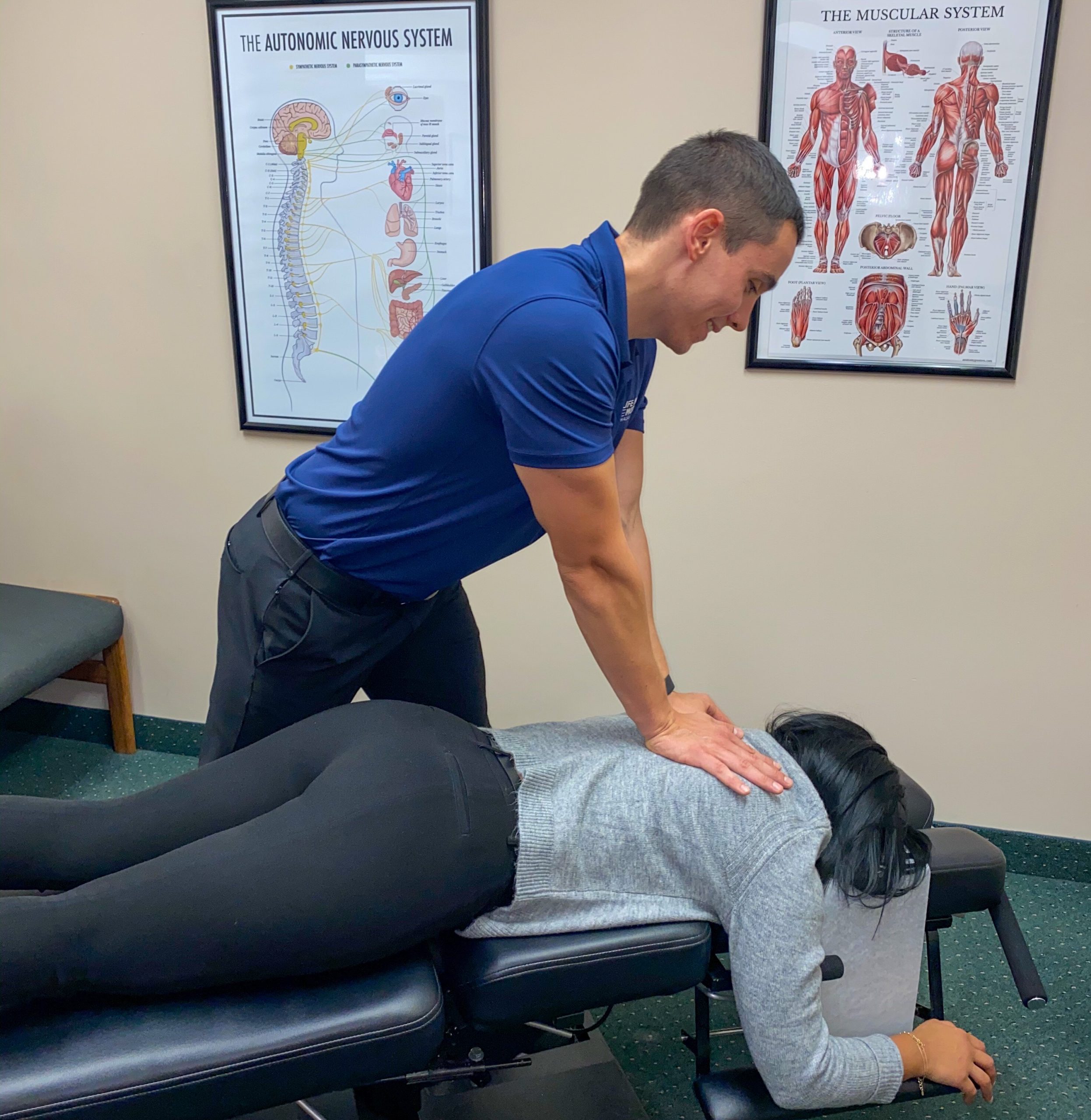
The gold standard non-surgical approach for lumbar disc-related sciatica. COX technique gently distracts and mobilizes the affected spinal segment on a specialized table — reducing intradiscal pressure, creating negative space that can help retract disc material off the nerve root, and restoring segmental motion. Published research has shown COX to produce clinical outcomes comparable to microdiscectomy for many disc-related radiculopathies.[1] Learn about our chiropractic techniques →
Class IV Laser Therapy
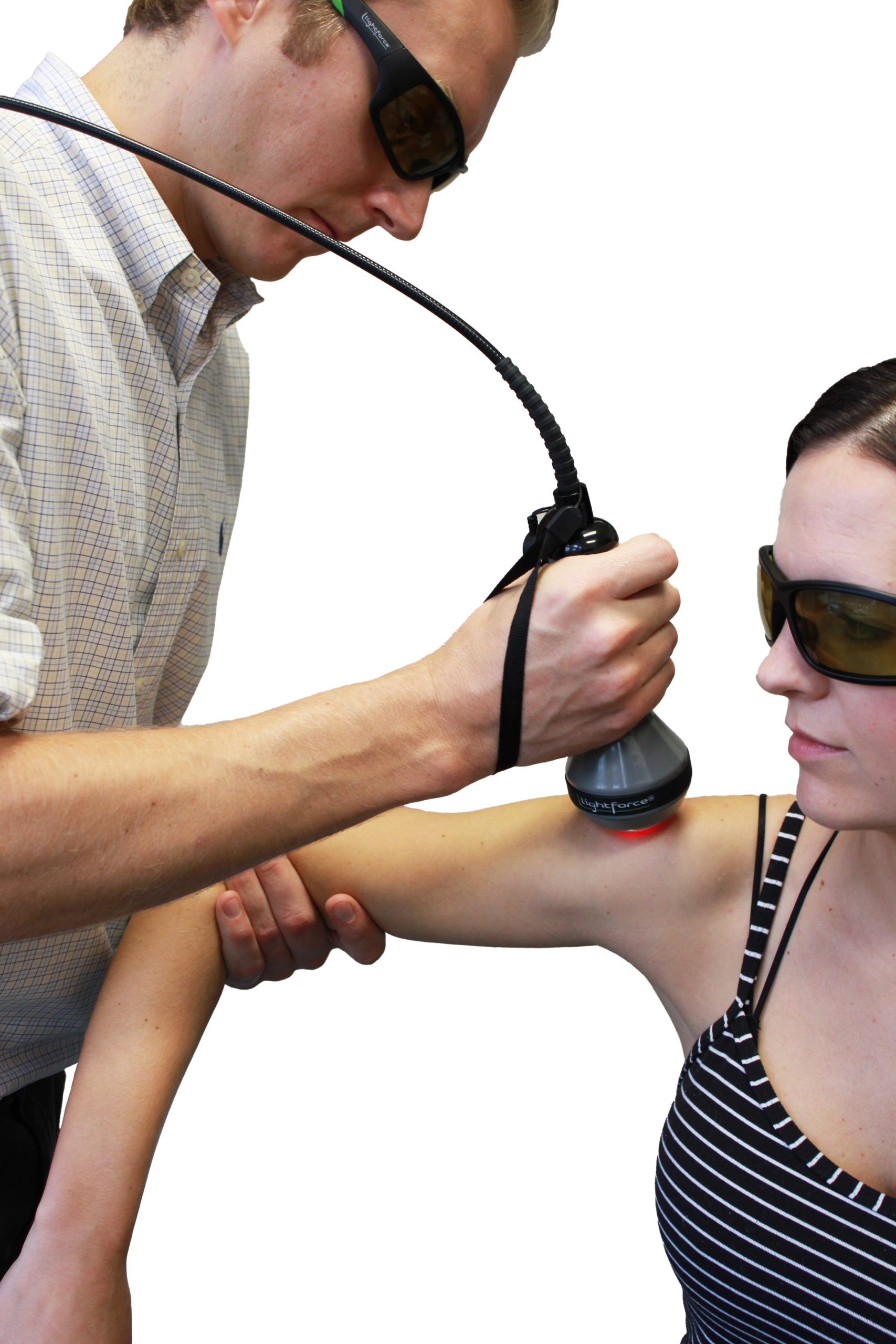
Photobiomodulation using the LightForce FXi 15W laser reduces the inflammatory cascade around irritated nerve roots — decreasing tissue swelling and interstitial pressure that contribute to nerve compression. Particularly effective for acute presentations and for sciatica that hasn’t responded to manipulation alone. Learn about laser therapy →

Soft Tissue & Myofascial Release
Essential when piriformis syndrome, gluteal trigger points, or hip external rotator tension is contributing to nerve entrapment. Targeted soft tissue work by our licensed massage therapist releases the specific structures compressing the nerve — often producing symptom relief that manipulation alone cannot achieve. Learn about massage therapy →
Diversified Spinal Manipulation
For sciatica driven by facet joint restriction, spondylolisthesis, or general segmental dysfunction, precise spinal manipulation restores normal joint mechanics and reduces the mechanical stress contributing to nerve irritation. Applied when appropriate to your specific diagnosis — never as a default first line.

DNS Rehabilitation & Nerve Gliding
Take-home rehabilitation is what prevents recurrence. Every sciatica patient receives DNS-based core stability and hip mobility work targeted to their specific findings, plus neuromobilization (“nerve gliding”) exercises that improve the sciatic nerve’s ability to slide through its anatomical pathways without irritation. All exercises are demonstrated in-office and archived in the Rehab Exercise Library for reference between visits.
Chiropractic care for sciatica has real evidence behind it
Manipulation vs. Simulated Manipulation
A double-blind randomized trial compared active spinal manipulation to sham manipulation in patients with acute back pain and sciatica from lumbar disc protrusion. Active manipulation produced significantly greater pain relief, faster return to work, and higher rates of pain-free days at follow-up.
Santilli et al., The Spine Journal, 2006Chiropractic vs. Microdiscectomy
A prospective study of patients with sciatica from confirmed disc herniation compared chiropractic spinal manipulation to microdiscectomy in patients who had failed medical management. 60% of patients who initially opted for chiropractic care achieved outcomes equivalent to surgical patients at 1-year follow-up.
McMorland et al., JMPT, 2010NICE Clinical Guidelines
The UK’s National Institute for Health and Care Excellence (NICE) recommends spinal manipulation as part of a treatment package for low back pain and sciatica in guideline NG59 — placing chiropractic care alongside exercise and psychological support as first-line non-pharmacologic options.
NICE Guideline NG59, updated 2020“I came in with intense pain radiating down my leg — I’d had it for weeks and nothing was helping. From the first visit, Dr. Dockery was incredibly thorough. He explained exactly what was going on, adjusted me with care, and gave me exactly the right exercises. I noticed real improvement quickly.”
Sciatica questions patients ask most
How long does sciatica usually take to go away?
Most acute sciatica episodes resolve within 4–6 weeks with appropriate care. When sciatica persists beyond 12 weeks it’s classified as chronic and typically indicates that the underlying source hasn’t been correctly identified or addressed. If your sciatica has lasted more than a few weeks without improvement, a proper diagnostic exam is the most important next step — treating the wrong source produces no result, no matter how long you continue.
Can chiropractic care make sciatica worse?
Poorly targeted chiropractic care can aggravate certain sciatica presentations — particularly when high-velocity manipulation is applied to an acute disc herniation without proper assessment. This is exactly why comprehensive orthopedic and neurological exam precedes any adjustment at Life in Motion. When the diagnosis is correct and the technique is matched to the source, chiropractic care is one of the most effective non-surgical options available.
Do I need an MRI before starting treatment?
Not necessarily. Comprehensive clinical exam is highly reliable for identifying the source of sciatica in most patients. MRI becomes valuable when symptoms don’t respond to initial care, when red flag symptoms are present, or when surgical consultation is being considered. Dr. Dockery will tell you clearly if imaging is warranted — and will not order it just to have imaging in the file.
Should I keep exercising or rest?
Prolonged bed rest for sciatica is no longer recommended and can actually slow recovery. Modified activity — walking, gentle movement, and specific rehabilitation exercises prescribed for your presentation — is what current evidence supports. Dr. Dockery will give you clear guidance on what to avoid (usually prolonged sitting, forward bending, and heavy lifting during the acute phase) and what to do (specific mobility and stability work that supports recovery).
Is my sciatica coming from a disc, or something else?
Only a comprehensive exam can answer this reliably. Common clues that point to disc involvement include pain that worsens with sitting or coughing, a positive straight leg raise, and dermatomal sensation changes. Piriformis syndrome, SI joint dysfunction, and spinal stenosis each produce distinct patterns that a trained clinician can identify. The five root causes described above cover the majority of presentations.
Can I be treated for sciatica while pregnant?
Yes. Sciatica during pregnancy is common — driven by hormonal ligament laxity, shifted center of gravity, and pelvic changes. Chiropractic care during pregnancy uses pregnancy-appropriate positioning and modified techniques to safely address the sources of sciatica. Our massage therapist also offers prenatal massage for pregnancy-related low back and sciatic symptoms.
References & Further Reading
- Santilli V, Beghi E, Finucci S. Chiropractic manipulation in the treatment of acute back pain and sciatica with disc protrusion: a randomized double-blind clinical trial of active and simulated spinal manipulations. The Spine Journal. 2006;6(2):131–137.
- McMorland G, Suter E, Casha S, du Plessis SJ, Hurlbert RJ. Manipulation or microdiskectomy for sciatica? A prospective randomized clinical study. Journal of Manipulative and Physiological Therapeutics. 2010;33(8):576–584.
- National Institute for Health and Care Excellence. Low back pain and sciatica in over 16s: assessment and management (NG59). 2016, updated 2020. nice.org.uk/guidance/ng59
- National Institute of Neurological Disorders and Stroke. Sciatica overview. ninds.nih.gov/health-information/disorders/sciatica
- American Academy of Orthopaedic Surgeons. Sciatica. OrthoInfo. orthoinfo.aaos.org/en/diseases–conditions/sciatica
- Mayo Clinic. Sciatica: Symptoms & causes. mayoclinic.org/diseases-conditions/sciatica
Ready to find out what’s actually causing your sciatica?
Same-day and Saturday appointments available. Your exam and first treatment happen at the same visit — you leave with a diagnosis, a plan, and often measurable relief on day one.
27620 Five Mile Rd, Livonia, MI 48154 · Mon–Thu & Saturday by Appointment