
Life in Motion Chiropractic · Livonia, MI
Your headaches may not be
coming from your head.
Most recurring headaches and migraines originate in the cervical spine — and respond dramatically to chiropractic care, even when years of other treatments haven’t worked. Dr. Dockery finds the source.
Why do so many headache sufferers never find lasting relief?
Because the headache is being treated — not the cause. Most recurring headaches are approached with medication that manages pain in the moment but does nothing to address the underlying structural issue generating that pain in the first place.
For a large proportion of headache sufferers, that structural issue is in the cervical spine. Restricted joints, tight muscles, and irritated nerves in the upper neck — particularly at the C1, C2, and C3 levels — can refer pain directly into the skull, producing sensations that are indistinguishable from primary headaches or even migraines.
This type of headache has a name: cervicogenic headache. And it is one of the most commonly misdiagnosed — and undertreated — headache types in clinical practice.
The critical question no one asks: Is your headache coming from inside your head, or is it being referred there from your neck? Dr. Dockery’s comprehensive cervical exam is designed to answer that question — and when the source is cervical, the results of treating it can be dramatic.
Not sure what type of headache you have? That’s exactly what your first visit is for. Learn what to expect →

Recurring headaches that don’t respond to medication are often structural — and structural problems are exactly what chiropractic treats.
Headache types commonly treated at Life in Motion
Multiple headache types respond well to chiropractic care — especially those with a cervical component. Dr. Dockery’s evaluation identifies which type you’re dealing with before any treatment is recommended.
Cervicogenic Headaches
Pain that originates in the cervical spine and is referred to the head. Often felt at the base of the skull, behind the eye, or on one side of the head. Can closely mimic migraines.
Responds well to chiropracticTension Headaches
The most common headache type — a dull, pressure-like ache that wraps around the head. Typically driven by tight muscles and restricted joints in the neck and upper back.
Responds well to chiropracticMigraines with Neck Component
Many migraines are preceded by neck stiffness and pain. When cervical dysfunction contributes to migraine triggers, treating the neck reduces frequency and severity — sometimes dramatically.
May reduce frequency & severityPost-Whiplash Headaches
Headaches that begin or worsen after a motor vehicle accident — caused by trauma to the cervical joints, muscles, and nerves. One of the most consistently treatable headache presentations.
Responds well to chiropracticPosture-Driven Headaches
Caused by forward head posture from prolonged screen use — “tech neck” — which dramatically increases cervical load and triggers chronic muscle tension headaches.
Responds well to chiropracticTMJ-Related Headaches
Jaw dysfunction (TMJ) and cervical spine problems frequently coexist and refer pain to similar areas of the head. Treating the cervical spine often improves both simultaneously.
Often connected to neckHow does the cervical spine cause headaches?

The upper cervical nerves — particularly C1, C2, and C3 — share pathways with the trigeminal nerve, which is responsible for sensation across the face and skull.
The upper cervical spine — the top three vertebrae — is anatomically connected to the trigeminal nerve, which supplies sensation to the face, scalp, and skull. When joints at C1, C2, or C3 become restricted or irritated, they can send pain signals along these shared nerve pathways directly into the head.
This referred pain can feel exactly like a migraine — one-sided, throbbing, sometimes accompanied by light sensitivity or nausea — even though the actual source is mechanical, not neurological.
Signs that your headache may be cervicogenic or cervically-driven:
- Headache starts or worsens with neck movement or sustained postures
- Neck stiffness or soreness accompanies or precedes the headache
- Pain typically starts at the base of the skull and radiates forward
- One-sided pain that stays on the same side
- Headaches that began or worsened after a neck injury or accident
- Reduced range of motion in the neck on the side of the headache
- Headaches that worsen with prolonged screen use or desk work
If several of these apply, your headaches may have a cervical source — and that is exactly what Dr. Dockery’s evaluation is designed to identify. Learn more about cervical spine dysfunction →
“Many patients come to us after years of headaches and multiple providers without lasting relief. When the cervical spine is the source, the results of treating it directly can be transformative — because for the first time, the right thing is being treated.”
Our approach to headache & migraine relief
Every patient begins with a thorough cervical evaluation. Once Dr. Dockery identifies the structural contributors to your headaches, treatment is targeted directly at the source — not the symptoms.

Upper Cervical Chiropractic Adjustments
Precise, targeted adjustments to the upper cervical spine — particularly C1, C2, and C3 — restore joint movement, reduce nerve irritation, and address the primary mechanical source of cervicogenic headaches. Dr. Dockery is trained in multiple techniques including low-force and instrument-assisted approaches, making cervical adjustments accessible even for patients who are apprehensive about neck treatment.
Learn about our chiropractic techniques →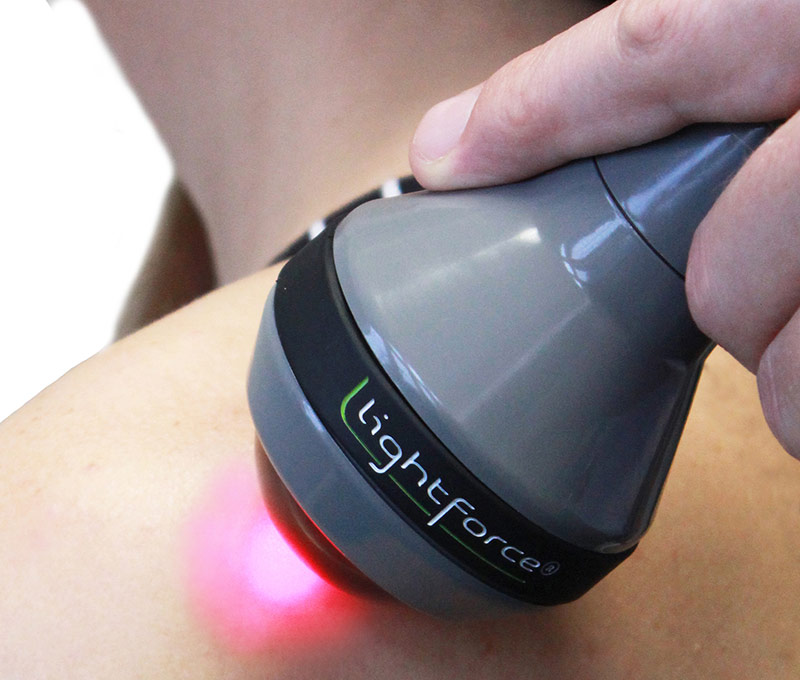
Class 4 Laser Therapy
Our LightForce Class 4 laser is particularly effective for headache cases with an inflammatory or muscular component. Directed at the cervical spine and suboccipital muscles, it reduces inflammation, releases tight tissue, and stimulates tissue repair — often providing rapid relief for patients with chronic headache patterns driven by neck tension.
Learn about laser therapy →
Massage Therapy & Soft Tissue Work
The suboccipital muscles at the base of the skull are among the most common headache generators in the body. Targeted massage and myofascial release to these muscles and the surrounding cervical tissue reduces the tension that feeds chronic headache patterns — and helps the spine hold its adjustments longer between visits.
Learn about massage therapy →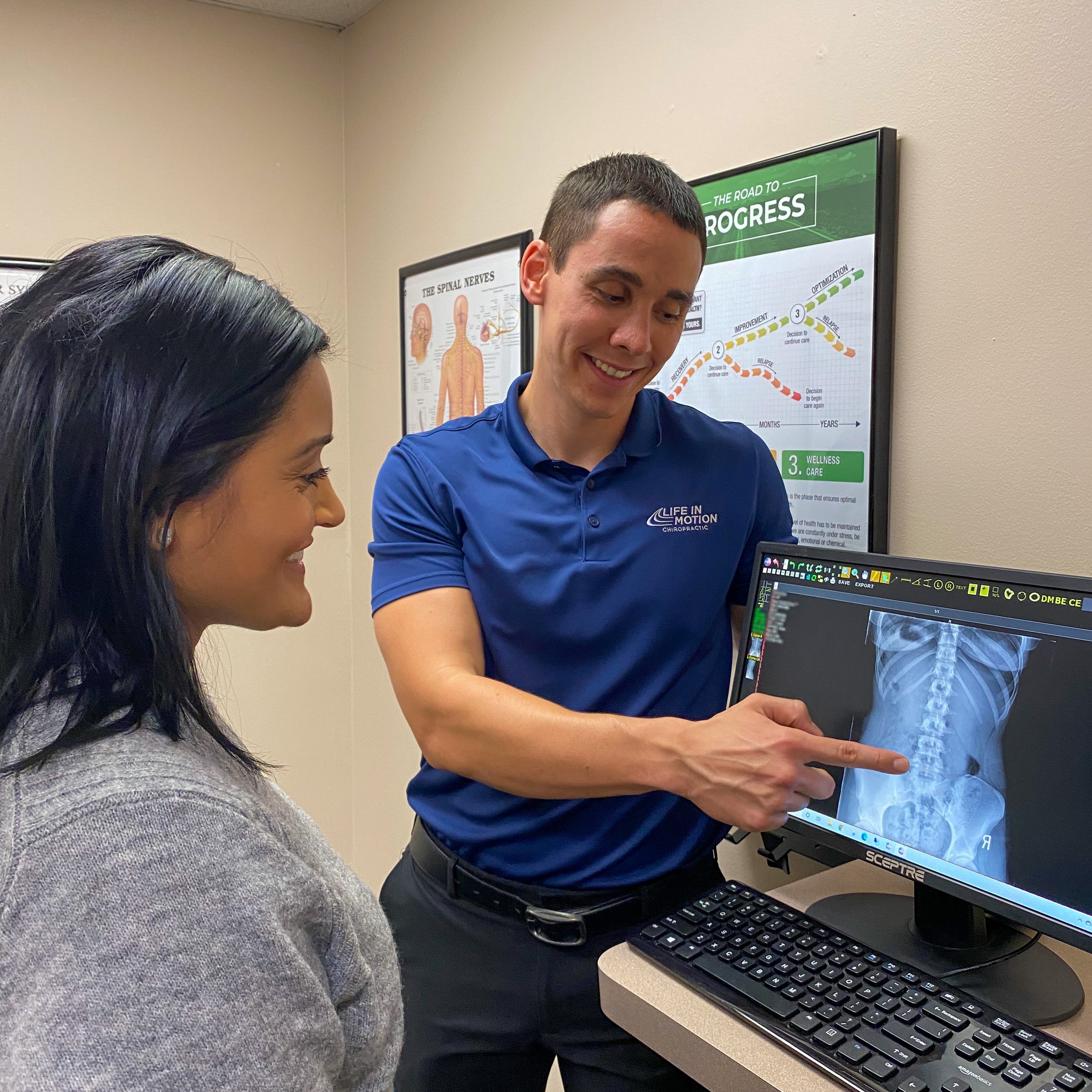
Cervical Rehabilitation & Posture Correction
Adjustments address the immediate joint restriction — but rehabilitation exercises address the reason it keeps coming back. Dr. Dockery prescribes targeted cervical strengthening, deep neck flexor activation, and postural correction drills that reduce the mechanical load driving headache recurrence. Available to review at home through our Rehab Exercise Library.
Headache patients we see regularly at Life in Motion
If you’ve tried other approaches without lasting relief, a cervical evaluation may be the missing piece.
Chronic headache sufferers who’ve tried medication without lasting results
Patients whose headaches began or worsened after a car accident or neck injury
Office workers and remote employees whose headaches worsen with screen time
Migraine patients who experience neck stiffness or pain before or during episodes
People with TMJ pain who also experience recurring headaches or jaw-related head pain
Anyone whose headaches are accompanied by neck tightness, limited range of motion, or shoulder tension
⚠️ When headaches require emergency evaluation
The vast majority of recurring headaches are benign and musculoskeletal in origin. However, some headache presentations require immediate medical attention. Please seek emergency care if you experience:
- A sudden, severe headache unlike any you’ve had before — sometimes called a “thunderclap headache”
- Headache with fever, stiff neck, confusion, seizure, vision changes, or difficulty speaking
- Headache following a head injury, fall, or trauma
- New or worsening headaches after age 50
- Headache with progressive neurological symptoms including weakness, numbness, or loss of coordination
If none of these apply and your headaches are recurring, tension-type, or accompanied by neck pain — that is the presentation we treat most effectively, and your first visit is designed to evaluate exactly that.
What patients say about headache care at Life in Motion
Thanks to Dr. Dockery, the pain I had for years is nearly gone, my headaches are less often, and my back pain is no longer a daily problem. He also helped me with my TMJ pain. I’m grateful to have found a doctor that actually listens and helps me.
I was nervous at first, but this experience completely changed me. Not only did my lower back pain go away, but my sciatica did as well. The staff is amazing, especially Dr. Dockery. I recommend this office to everyone.
Dr. Dockery is outstanding — you can tell he truly cares. He takes the time to teach and never stops learning. I left with useful information and a clear plan. I noticed real improvement quickly.
I love that my treatment plan is tailored to my specific needs, with clear measurable goals so I can actually see my progress. Dr. Dockery and his staff are incredibly friendly and professional.
Read more patient testimonials →Headache & migraine FAQs
Can chiropractic care really help with headaches and migraines?
Yes — particularly for headaches with a cervical component. The cervical spine is one of the most underrecognized sources of recurring headache. When joint restriction, nerve irritation, or muscle tension in the neck is generating or contributing to head pain, chiropractic adjustments address the problem directly. Many patients who’ve tried medication without lasting results find significant improvement once the cervical source is identified and treated. See our full FAQ →
What is a cervicogenic headache?
A cervicogenic headache originates from dysfunction in the cervical spine — not from inside the brain. Restricted joints and irritated nerves in the upper cervical segments (particularly C1–C3) can refer pain to the head, mimicking tension headache or even migraine. It’s one of the most consistently treatable headache types when properly identified.
How many visits does it take to reduce headaches?
Many patients notice a reduction in frequency or intensity within the first few visits. The exact timeline depends on your headache type and how long the underlying cervical dysfunction has been present. After your initial exam, Dr. Dockery will outline a clear plan with realistic goals and a timeline.
I’ve had migraines for years with no answers. Could it be my neck?
It’s worth evaluating. Cervical dysfunction is one of the most underdiagnosed contributors to chronic headache and migraine — especially when neck stiffness, neck pain, or worsening with posture accompanies your episodes. Many patients who’ve tried multiple treatments without lasting relief find significant improvement once the cervical component is addressed.
Do you also treat tension headaches?
Yes — tension headaches are the most common headache type we treat. They typically originate in tight muscles and restricted joints of the neck and upper back, which respond directly to chiropractic adjustments, soft tissue work, and targeted rehabilitation exercises. Learn more about the neck-headache connection →
Do you accept insurance for headache treatment?
Yes, we accept most major insurance plans. Check your coverage here →
References
- Headache Classification Committee of the International Headache Society. “The International Classification of Headache Disorders, 3rd edition.” Cephalalgia. 2018;38(1):1-211.
- Bryans R, et al. “Evidence-based guidelines for the chiropractic treatment of adults with headache.” J Manipulative Physiol Ther. 2011 May;34(5):274-89.
- Sjaastad O, Fredriksen TA, Pfaffenrath V. “Cervicogenic headache: diagnostic criteria.” Headache. 1998;38(6):442-5.
If your headaches aren’t getting better, the source hasn’t been found yet.
Same-day and Saturday appointments available. Your new patient cervical evaluation and first treatment are waiting.
27620 Five Mile Rd, Livonia, MI 48154 · Mon–Thu & Saturday by Appointment